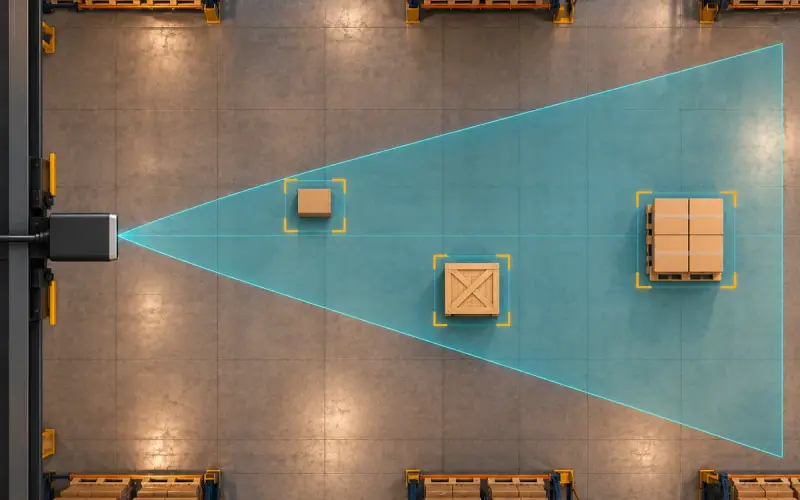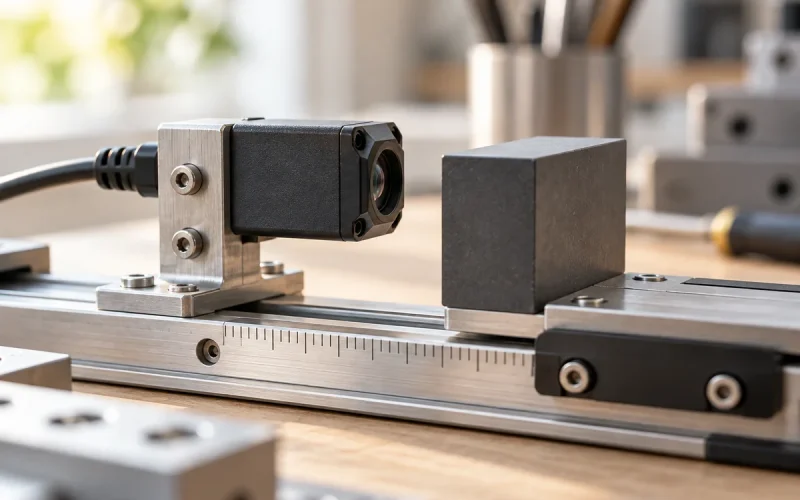

A depth camera measures spatial information about the surfaces in its view. Its output can support geometric processing such as locating an object, describing an occupied region or measuring the relationship between surfaces.
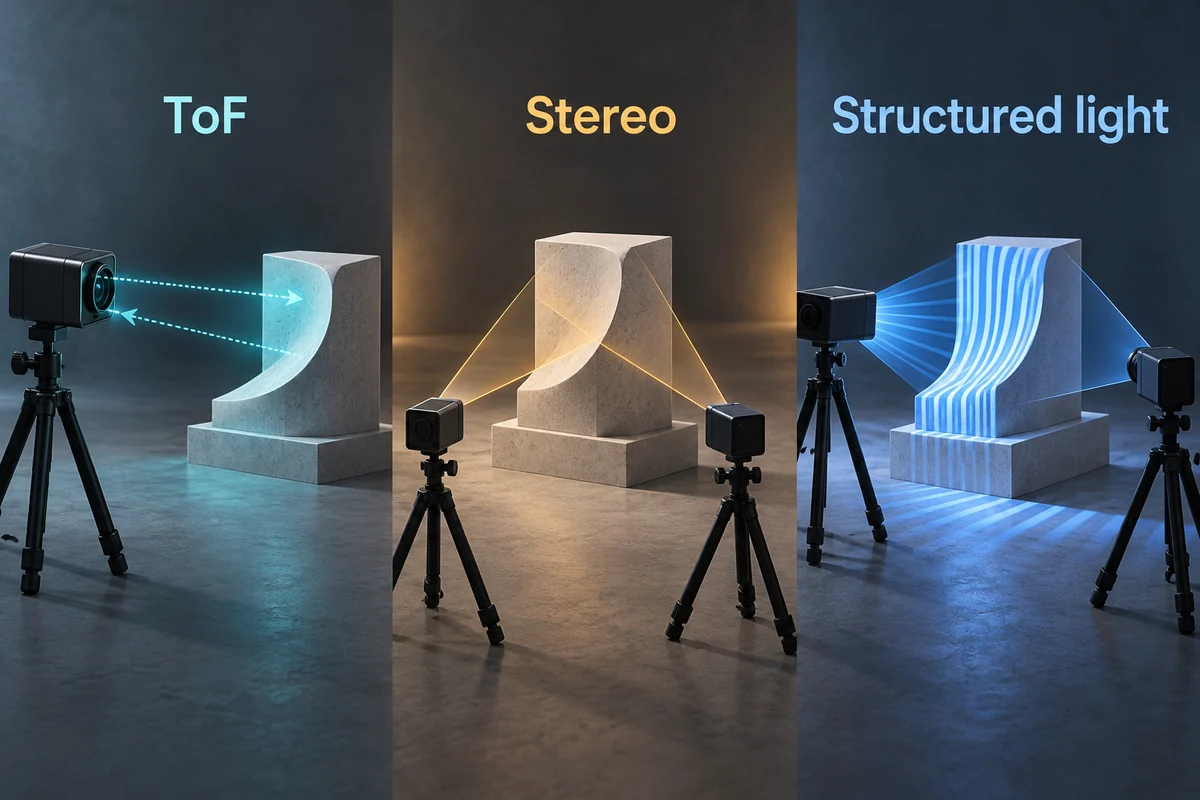
Depth cameras use different measurement routes. ToF, stereo and structured light are common examples. RGB-D describes a system providing color and depth data; it does not, by itself, identify how the depth was measured.
Main types of depth cameras
| Measurement route | How depth is obtained | Conditions to include in the selection |
|---|---|---|
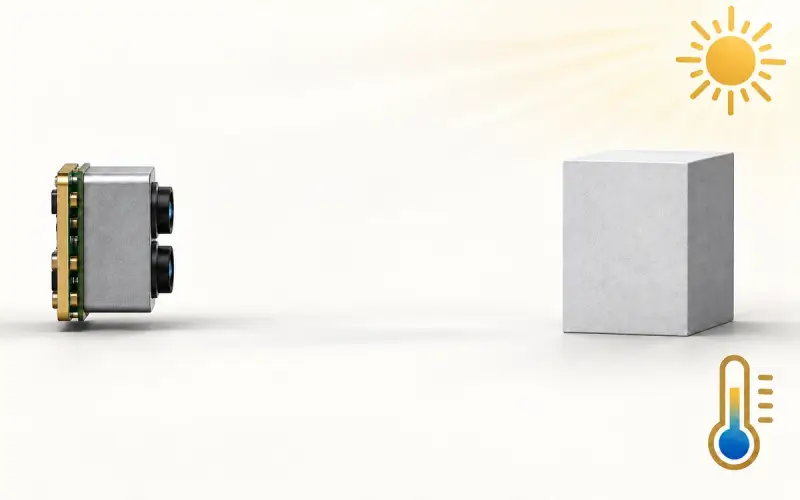
| Time-of-Flight | Estimate the delay of emitted light and its return | Target return, ambient light, optics and acquisition timing |
| Stereo vision | Match features in calibrated images from different viewpoints | Image texture, light, visibility in both views and matching behavior |
| Structured light | Observe a known projected pattern and calculate geometric correspondence | Pattern visibility, projector-camera geometry, motion and calibration |
Individual products vary within each route. Active stereo, for example, adds projected texture to a stereo arrangement. Compare the actual camera and operating mode against your scene rather than assigning all depth camera types a fixed performance ranking.
Read the ToF and stereo comparison or the ToF and structured-light selection guide for a more focused technology decision.
What does a depth camera output?
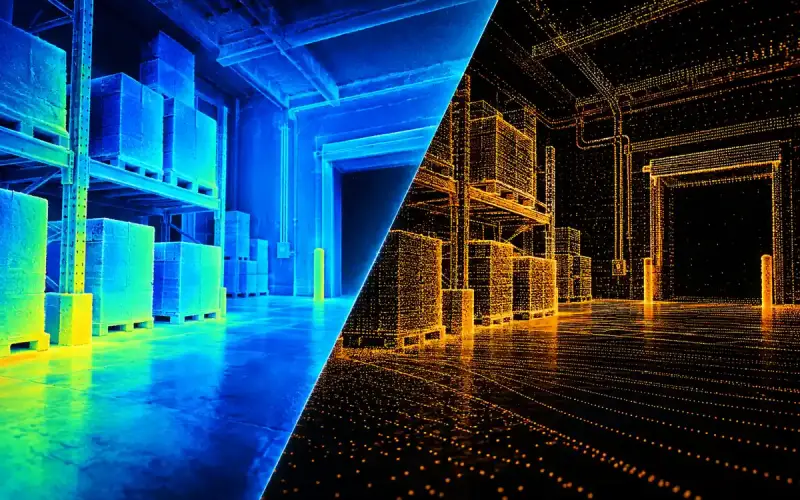
A depth image associates numerical measurement values with image locations. The device documentation defines its units, scale and coordinate convention. A point cloud expresses geometry as spatial coordinate samples and may be produced by the camera or calculated on the host.
A viewer often displays depth as grayscale or false colors. That preview helps show the scene and its gaps; numerical processing should use the original measurement data and its documented meaning. The depth map vs point cloud guide explains the integration choices.
Depth cameras and RGB-D cameras
An RGB-D camera combines appearance information with depth. Applications can use color or texture to identify a region, then use geometry for spatial processing. The streams need appropriate geometric alignment and timing for that joint use.
The color and depth imagers can have different resolutions and fields of view. Use the model's calibration and stream definitions rather than assuming pixel locations match directly. See how an RGB-D camera obtains depth.
Choose the level of depth camera comparison you need
| Comparison question | Useful next step |
|---|---|
| Which depth-sensing principle fits this scene? | ToF vs structured light or ToF vs stereo cameras |
| Which ToF camera format fits the host and mounting? | ToF camera selection and integration |
| Which exact model and mode meets the project requirement? | Compare current model specifications and evaluate the same target, distance, lighting, output and timing |
A technology comparison explains how measurements are obtained. A model comparison needs the exact configurations, software and test conditions of the shortlisted cameras. For an RGB-D shortlist, also compare color and depth views, spatial registration and frame timing. This keeps broad depth camera types separate from a purchase decision between specific products.
A depth image produced by a learned monocular method can have the same grid shape as one from a depth-sensing camera. Establish how its scale is obtained, which coordinate convention it uses and how it performs on the intended scene. The file shape alone does not establish the source or metric accuracy of the geometry. Likewise, an RGB-D label describes color plus depth, not an additional ranging principle.
How to choose a depth camera
Describe the surfaces, working distances and area to cover. Identify the smallest feature and the time by which the software needs a useful measurement. Then review the target material, ambient light, movement, mounting position and available host processing.
Compare error and valid measurements under those conditions. A maximum-range or resolution figure is one part of that review. The ToF camera selection guide shows how these requirements connect to product formats and interfaces.
DOMI's ToF modules and USB RGB-D cameras provide starting points for depth-sensing evaluation. Contact us with the scene and host requirements to discuss the relevant options.
FAQs
What is a 3D depth camera?
A depth camera provides spatial measurements associated with surfaces in its view. Software can use those measurements as an image of depth values or convert supported data into spatial points for geometric processing.
How does a depth camera work?
The measurement depends on its technology. ToF estimates light travel delay, stereo uses correspondences between calibrated views, and structured light uses observations of a known projected pattern with geometric calibration.
Does a depth camera capture the complete shape of an object?
A view contains measurements of surfaces the system can observe. Obtaining additional sides requires additional viewpoints and a method for relating their data. Include occlusion and missing measurements in the application design.