

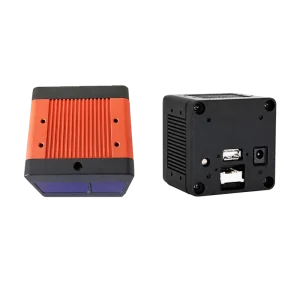
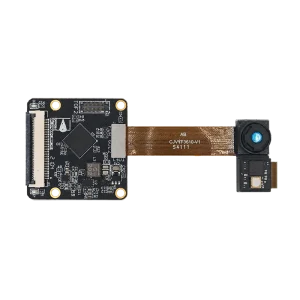
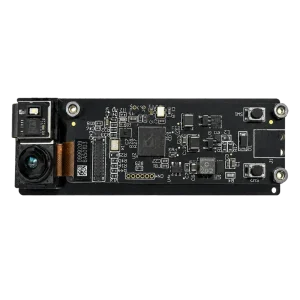
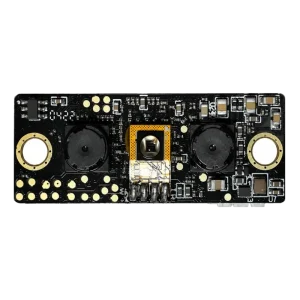
Compare depth-sensing modules and cameras
Select the required depth sampling and working distance, then match the interface to your host. The following models cover embedded sensor modules, processed depth outputs and application cameras in our catalog.
| Model | Depth sampling | Distance specification | Host connection |
|---|---|---|---|
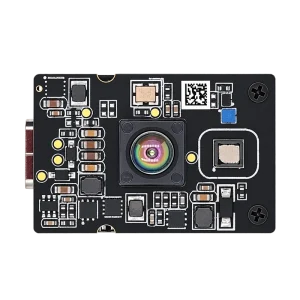
| DMAS2M001 | 40 × 30 at 10 fps | 0.2–8 m at 30 klux, 10%–90% target reflectivity | USB-C / FPC |
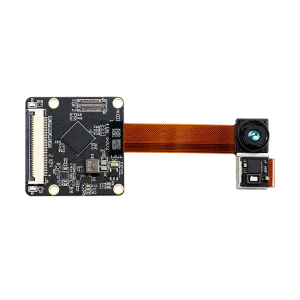
| DMOM2508CL | 320 × 240 at 10–30 fps | 0.2–2 m | 2-lane MIPI CSI-2 |
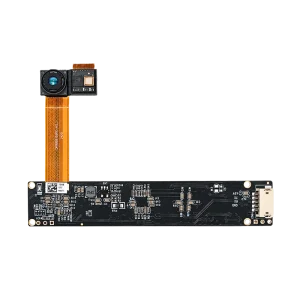
| DMOM2808D | 320 × 240 at 10–30 fps | 0.25–4.5 m | 2-lane MIPI CSI-2 |
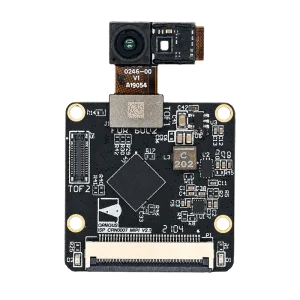
| DMOM2501C | 100 × 100; 15 / 30 fps typical | Up to 6 m | 2-lane MIPI CSI-2 |
| DM5005A | 320 × 240; 30 fps maximum | 0.2–2 m with the 940 nm option; 0.3–5 m with the 850 nm option | USB 2.0 / UVC 1.2 |
| DM-PS2601-VGA | 640 × 480 at 30 fps | 0.3–5 m | Ethernet / TCP with onboard people-counting processing |
These entries describe each model's specification and configuration. Working distance, frame timing and valid depth depend on target materials, illumination, ranging settings and the optical assembly. Use the required combination of these conditions to plan your evaluation.
Choose the host integration route
MIPI modules for an embedded processing pipeline
DMOM2508CL, DMOM2808D and DMOM2501C provide a 2-lane MIPI CSI-2 route for an embedded host. DMOM2508CL covers a 0.2–2 m range with 940 nm illumination; DMOM2808D covers 0.25–4.5 m with 850 nm illumination. DMOM2501C offers 100 × 100 sampling and a 44° × 44° field of view for a different coverage and sampling requirement.
Plan the carrier board, sensor and illumination supplies, capture driver, data format, depth processing and calibration together. Connector wiring and host software belong to the selected module configuration. Share your host processor and capture pipeline with us to discuss the integration route.
USB routes for processed depth
DMAS2M001 provides depth, point-cloud and confidence data from a 40 × 30 array. Its USB-C / FPC options support a host integration discussion around the selected connector, protocol and data format.
DM5005A combines a QVGA ToF module and processing board with USB 2.0 / UVC 1.2. It provides point-cloud, depth and IR data; its 940 nm and 850 nm options have different distance specifications. Include enclosure and heatsink design in the mechanical and thermal plan.
For color and depth together over USB, explore our separate VGA ToF RGB-D camera selection.
Ethernet with application processing
DM-PS2601-VGA combines VGA depth imaging, onboard Linux processing and people-counting outputs over TCP. Its 120° horizontal × 90° vertical field of view supports installation planning for entrances and monitored zones. Start with the 3D people-counting application guide to define coverage, traffic direction and the data your system needs.
Processing and recognition products in this catalog
The catalog also includes components for specific processing and recognition tasks. Select these by their role in your architecture.
| Product | Role | Integration focus |
|---|---|---|
| DMOM3006A | ToF image signal processor for a depth-processing pipeline | MIPI CSI-2 sensor input; MIPI CSI-2 or DVP host output; calibration and output format |
| DM-SV001F1 | Binocular face-recognition module for smart locks and access control | UART host communication, recognition workflow and enclosure integration |
Match sensing coverage to the task
| Task | Selection focus | Application path |
|---|---|---|
| Robot perception | Near-field coverage, target size, motion and response timing | Robotics and AMR selection |
| UAV distance sensing | Ground or obstacle target, attitude, light, payload and host pipeline | ToF camera selection for UAVs |
| Gesture interaction | Working region, spatial sampling and interaction latency | Touchless gesture control |
| Object dimensioning | Object coverage, edge detail, calibration and final dimensional tolerance | Static and dynamic volume measurement |
Use resolution and field of view together to assess how the target appears at the working distance. Include mounting geometry and the complete acquisition-to-application timing in the evaluation.
Technical resources
The DMOM2808D datasheet, Rev. 1.0 covers its MIPI module specifications. The DM5005A datasheet, v1.0 describes its wavelength options, USB interface and output data. Use the corresponding product pages for model-specific electrical, optical and integration information.
Frequently asked questions
How do I choose between MIPI and USB depth sensing?
Choose MIPI around an embedded carrier board and host capture pipeline. USB routes such as DM5005A combine sensor and processing hardware with a USB host connection. Match the required output, driver configuration, power and mechanical design to your application.
Which products provide processed depth or application results?
DMAS2M001 provides depth, point-cloud and confidence data, while DM5005A provides point-cloud, depth and IR data. DM-PS2601-VGA offers onboard people-counting processing with Ethernet / TCP results. Select the output and processing route your host needs.
Where should I start for single-point distance sensing?
Our ToF sensor selection guide compares compact single-point devices, area sensing and long-distance directional measurement. Choose the spatial information needed for the task before selecting a camera or distance sensor.
Discuss your module application
Share your working distance, target size and materials, lighting, host platform, required output and mounting constraints. Discuss your module requirements with our team so we can help identify the relevant model and evaluation configuration.