

01
Entry and exit
Define a virtual line, direction rules and debounce logic for one-way or bidirectional doorways.
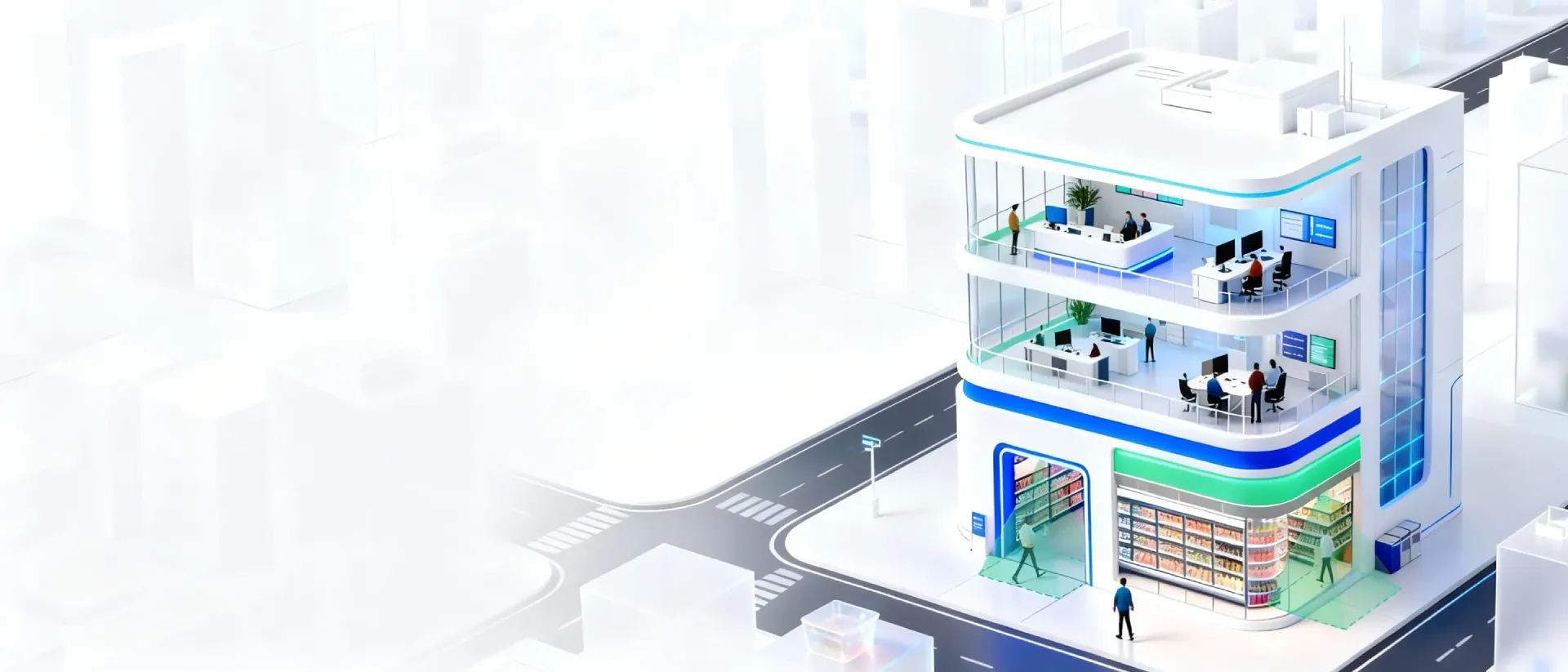
Build bidirectional counting and footfall analytics from depth, with mounting, validation and integration guidance for real entrances.
Count direction, crossings and repeat passes from depth geometry rather than visible-light texture alone.
Feed live occupancy, queue, dwell and heat-map logic to the host analytics layer.
Use depth features and anonymous tracks without making face recognition part of the design.
Expose timestamps, direction, confidence and zone events to edge software, APIs or building systems.
Define the metric first
Before choosing optics or compute, define what your business system should count. Entry, exit, occupancy and heat map outputs each need different zone geometry, track state and exception rules.
Recommended acceptance language
Specify the doorway, mounting height, traffic direction, group policy, peak density, ground-truth method and tolerated event error before discussing a rollout.
01
Define a virtual line, direction rules and debounce logic for one-way or bidirectional doorways.
02
Maintain an estimated in-zone population with reset, timeout and exception rules that your application owns.
03
Use track duration, queue-zone occupancy and wait-time bands to expose operational friction.
04
Aggregate anonymous positions into zone density maps without retaining identifiable imagery.
05
Separate an actual crossing from a person who pauses, reverses or crosses the same line twice.
06
Define how strollers, carts, luggage and side-by-side groups are classified before acceptance testing.
Where projects lose trust
A clean demo proves that a track can be detected. A production pilot proves that the event remains correct when people pause, overlap, turn back or carry objects.
RGB-only systems can confuse a projected shadow, glare or a low-contrast silhouette with a person. Depth gives the tracker a geometric cue, while confidence rules still decide whether a sample is usable.
Shoulder-to-shoulder people can merge into one blob or split into fragments. Validate mounting height, field of view and the host tracker with the widest real group.
A person who enters the doorway and turns back is not the same event as an exit. Direction state, hysteresis and track timeout belong in the acceptance test.
Retail carts, cases and umbrellas change the observed silhouette. Decide whether the metric is people-only, people-plus-assistive-device or total traffic.
Use depth to make the scene more observable and less dependent on visible-light appearance. Do not turn that into an absolute “works in every environment” claim. Publish the qualified geometry, confidence thresholds and exception path instead.
Selection logic
The right comparison is system-level. ToF is attractive when spatial separation and a depth-native privacy architecture matter, but its return signal and installation envelope still need qualification.
| Decision factor | Typical 2D camera concern | 3D ToF implication |
|---|---|---|
| Visible-light dependence | Sensitive to contrast, shadows, glare and camera exposure | Uses active depth plus confidence; still validate ambient IR and return signal |
| Low light and darkness | Requires enough visible-light signal for stable segmentation | Can preserve depth structure in low visible light within the qualified operating envelope |
| Spatial separation | 2D overlap can merge people with similar appearance | Height and distance cues help, but dense occlusion remains an application limit |
| Reflective or transparent surfaces | Can be visually bright while providing little geometric evidence | May create multipath, missing pixels or unstable range; test the real scene and cover glass |
| Privacy architecture | Often starts from RGB frames and then removes or masks identity | Can be architected around depth features, anonymous tracks and edge-only event output |
| System responsibility | Camera, model and event logic are often supplied as one closed product | DOMI supplies sensing hardware and integration guidance; host software owns tracking, policy and acceptance |
From depth frame to event
Treat the camera, tracking model and business event as separate layers. During a pilot, keep enough depth, confidence and timing evidence to explain why a frame became an entry, exit, exception or no-event.
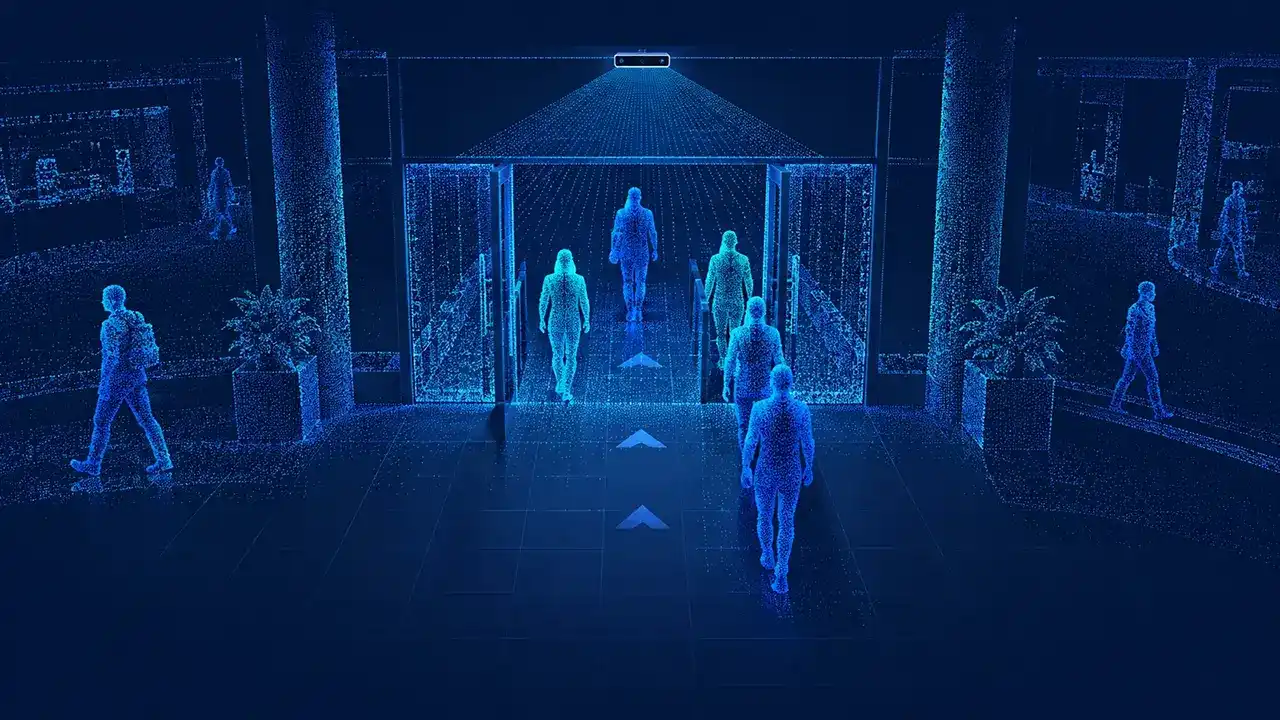
Acquire depth frames with timestamp, range and confidence metadata from the selected camera.
Reject invalid pixels, multipath artefacts and points outside the calibrated entrance volume.
Transform the depth map into a floor, doorway or zone coordinate frame with known mounting geometry.
Detect, associate and classify tracks, then apply line, direction, dwell and debounce rules.
Send count deltas, occupancy, confidence and evidence references to the edge app, API or BMS.
Installation geometry
A product range number is not a finished coverage map. Mounting height, pitch, doorway width, walking direction and the floor or wall return determine the useful depth volume.
Send us the scene constraintsEngineering limits
These are not footnotes. They are the conditions that decide whether a depth counter is reliable in your doorway and what needs to change in the mechanical, optical or software design.
Active ToF return signal can be reduced by strong ambient infrared, especially near glazed façades or skylights.
Validation move: Test at the worst solar condition, log confidence/invalid-pixel rate and qualify shielding or placement.
Low return, specular reflection and transmission can create missing or displaced depth around black clothing, mirrors and glass.
Validation move: Use the real finishes and garments in a scene matrix; define a confidence threshold and exception path.
A fogged cover window, water film or cleaning residue can increase crosstalk and distort ranging. Washroom cubicle occupancy is a different sensing problem from entrance footfall.
Validation move: Validate cover material, sealing, cleaning interval, HVAC/steam conditions and whether PIR or another sensor is better for cubicles.
Overlapping active emitters may interfere or create unstable depth if channels and placement are not coordinated.
Validation move: Stagger fields of view, use supported synchronisation or qualify camera spacing in the complete installation.
A single viewpoint cannot recover people fully hidden behind a dense group or a doorway stack.
Validation move: Set a density limit, consider paired views and test the busiest five-minute window, not only empty-door samples.
Depth frames are only the sensing layer. Neural inference, tracking, event buffering and network transport determine end-to-end latency.
Validation move: Specify FPS, frame age, CPU/NPU budget, queue depth and event delivery SLA before choosing the interface.
Application fit
Measure entrances, queue build-up, dwell zones and campaign lift while keeping the architecture focused on anonymous operational data.
Qualify a high-throughput corridor against backlight, luggage, crowd density and multiple-camera interference before committing to a platform rollout.
Use ToF for entrance footfall and queue context only after validating steam, condensation, reflective tiles and privacy requirements. Cubicle occupancy may need a purpose-built presence sensor.
Evaluation hardware
Start with a host-friendly camera for scene discovery. Move to an embedded module only after the entrance geometry, event model and acceptance evidence are stable.
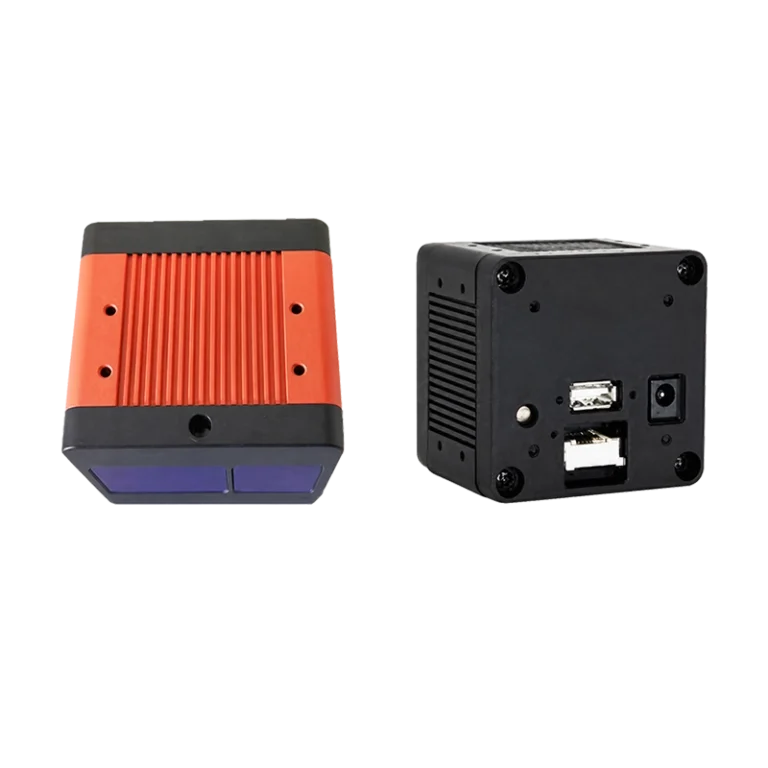
DM-PS2601-VGA
Edge people-counting camera
A direct pilot path for entrance counting, occupancy and queue analytics over Ethernet.
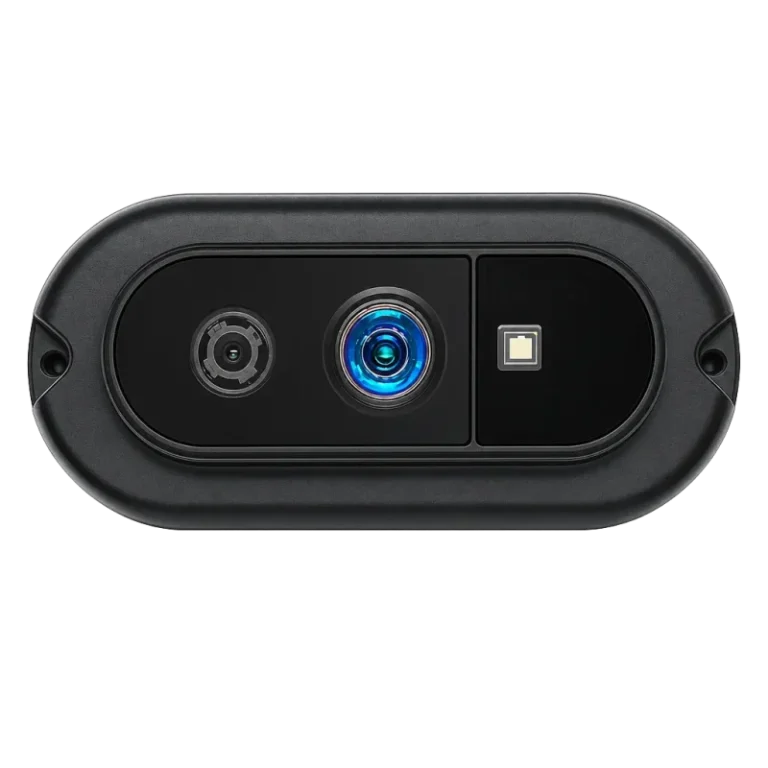
DM-RGBD5003A
USB RGB-D evaluation camera
Fast proof-of-concept on a laptop, edge PC or ROS pipeline.
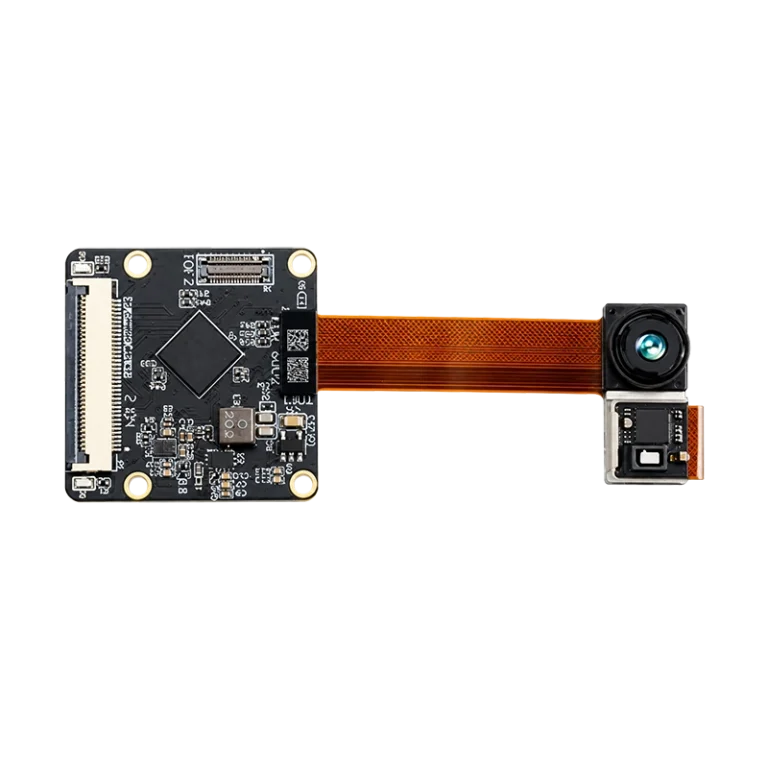
DMOM2508CL
Embedded MIPI depth module
Compact production hardware after scene geometry and algorithm assumptions are proven.
Pilot acceptance
A useful pilot has a repeatable protocol. Record the scene, the expected events and the failure modes so a second site can be compared without moving the goalposts.
01
Use a manual tally or an independently reviewed reference sample with known direction and time window.
02
Report missed, extra, reversed and duplicate events separately instead of hiding them in one accuracy number.
03
Repeat under day/night, backlight, clothing, reflective finishes, groups, carts, luggage and washroom cover conditions.
04
Log camera settings, firmware, host load, frame age, thresholds and mounting references for every run.
System hand-off
The integration decision is not USB versus MIPI alone. It is where depth is decoded, where tracks are created, how events are buffered and which layer can prove a count after the installation is live.
Questions before the pilot
No. Active depth can reduce dependence on visible-light shadows and texture, but ambient infrared, sunlight, reflective surfaces, condensation, occlusion, mounting geometry and host tracking still affect performance. Specify the scene and validate it with measured ground truth.
No. The camera is the depth-sensing layer. Detection, multi-object tracking, line and zone rules, U-turn logic, analytics, data retention and system acceptance belong in the host application or system integrator scope.
Compare the complete system on spatial resolution, separation of side-by-side people, privacy policy, low-light behaviour, material sensitivity, latency, installation height and total integration effort. Radar can be strong for presence and coarse motion; thermal can help in darkness but introduces its own privacy and calibration questions.
It can be evaluated for entrance footfall when the doorway, mounting height and cover environment are controlled. Steam, water film, mirrors and glossy tiles can disturb ranging. For cubicle-level occupancy, compare PIR or another presence sensor rather than assuming a doorway counter solves it.
Yes, after a multi-camera interference and placement study. Keep overlapping active fields controlled, qualify synchronisation/channel settings supported by the chosen hardware and test the complete corridor under peak density.
DOMI provides depth-sensing hardware, product specifications and engineering support for the integration path. Your team or solution partner typically owns the tracking model, dashboard, business rules, data policy and final field acceptance unless a separate scope is agreed.
Start with DM-PS2601-VGA when you want edge-side people-counting output over Ethernet. Use DM-RGBD5003A for host-side RGB-D evaluation, then consider DMOM2508CL or DMOM2808D for an embedded design once the geometry and algorithm are understood.
Record frame rate, depth range, valid-pixel coverage, mounting geometry, ground-truth counts, directional error, false events, frame age, host load and exception samples across lighting, clothing, reflective finishes and peak density.
When you have a real doorway, mounting envelope, host platform or pilot date to review. Share the constraints and DOMI can respond with a shortlist, evaluation questions and an integration path instead of a generic catalogue reply.
Bring a real scene
Tell DOMI what the entrance, host platform and pilot must prove. We can help map the evaluation hardware, interface assumptions and validation questions before a production quote.
A few details are enough to start the conversation.