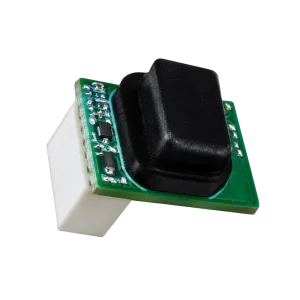

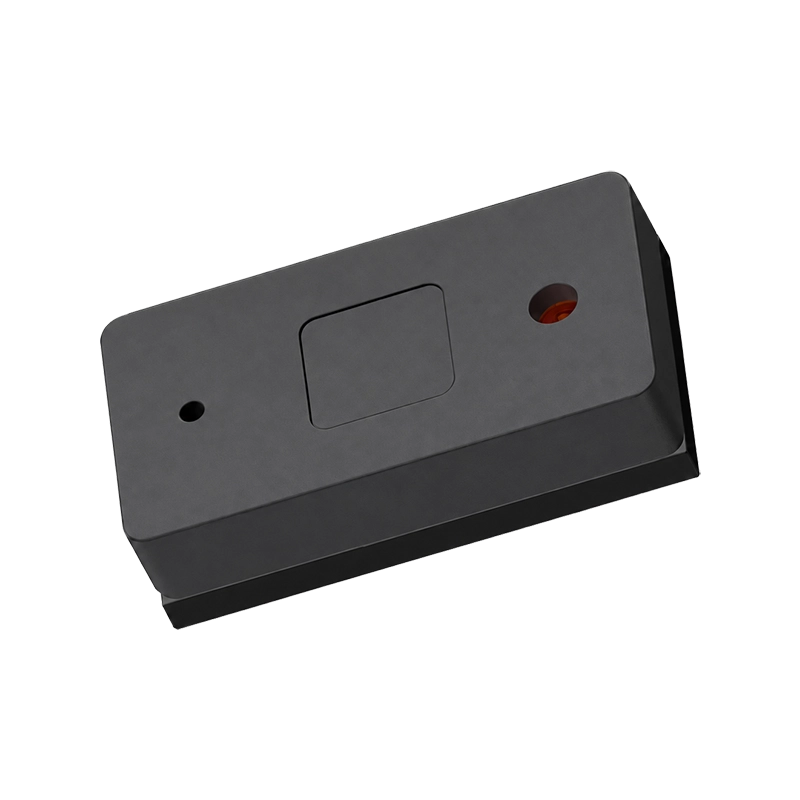
DM0301 Pin-to-Pin Compatible ST VL53L4CD Replacement
DM0301 gives existing ST VL53L4CD designs a pin-to-pin compatible hardware option for single-zone distance sensing. It combines a 940 nm VCSEL, SPAD receiver and onboard processing in a 4.40 × 2.40 × 1.00 mm optical LGA package, with indoor ranging up to 4 m and output up to 50 Hz. Connect through I2C and use the DM0301 firmware and initialization sequence in your host application.
Key Highlights
- Retain the pin layout of an ST VL53L4CD hardware design with a compact replacement sensor.
- Add distance input to presence and approach sensing with indoor ranging up to 4 m.
- Read processed measurements through I2C, using polling or a GPIO1 data-ready interrupt.
- Fit single-zone sensing into small devices with a 4.40 × 2.40 × 1.00 mm package.
| Qty | USD |
|---|---|
| 5000+ | $1.45 |
| 1000+ | $1.90 |
| 100+ | $2.20 |
| 10+ | $3.20 |
Overview
DM0301 integrates a 940 nm emitter, SPAD array, microlens, time-to-digital converter, histogram memory and Arm Cortex-M0 MCU. The host receives processed distance results for proximity triggers and single-zone ranging.
The nominal configurable range is 20 mm to 5 m. Indoor measurement reaches up to 4,000 mm. Select the ranging settings around the target distance, lighting and installed optical window. Embedded histogram, crosstalk and anti-ambient-light processing, together with cover-glass calibration support, form part of the sensing path.
- Indoor Range
- Up to 4,000 mm
- Frame Rate
- Up to 50 Hz
- Package Size
- 4.40 × 2.40 × 1.00 mm
- Interface
- I2C, 0x41, up to 1 Mbit/s
Applications
VL53L4CD hardware migration
Use DM0301 when a product refresh needs to retain a compact single-zone sensor footprint. Plan the host software around the DM0301 I2C address, firmware-loading procedure and measurement sequence. Our VL53L4CD replacement guide covers the electrical, software and optical work involved.
Presence and approach triggers
Use measured distance to trigger host actions as a person or object approaches a smart device. The small package suits appliances, wearables and near-user equipment where sensing space is limited.
Auxiliary robot proximity sensing
A single-zone distance channel can observe a defined direction near a robot body or complement a wider-field perception system. Choose the placement around the object region and the host response needed for the task.
Technical specifications
| Parameter | Specification |
|---|---|
| Measurement principle | Single-zone direct Time-of-Flight; processed distance output |
| Emitter | 940 nm VCSEL |
| Nominal configurable range | 20 mm to 5 m |
| Indoor measurement range | Up to 4,000 mm |
| Output rate | Up to 50 Hz |
| Field of view | 25° |
| Field of illumination | 22° |
| Supply voltage | 2.97-3.63 V; 3.3 V typical |
| Typical current | 0.9 mA at 1 Hz; 17 mA at 30 Hz |
| Host interface | I2C; 7-bit address 0x41; up to 1 Mbit/s |
| Control pins | XSHUT; active-low GPIO1 data-ready signal |
| Package | 12-pad optical LGA |
| Dimensions | 4.40 × 2.40 × 1.00 mm |
| Operating temperature | -20 to 70 °C |
| Storage temperature | -40 to 85 °C |
| ESD rating | ±2 kV HBM; ±500 V CDM |
| Latch-up immunity | ±100 mA |
| Laser safety | Class 1; IEC 60825-1:2014 |
| Material compliance | RoHS and REACH |
| Standard packing | 500 pieces per reel |
Host and optical integration
I2C acquisition
Configure the host for address 0x41 and a supported bus rate up to 1 Mbit/s. Complete boot configuration and firmware transfer before starting ranging. Single measurement, timed measurement and fixed N-frame operation provide acquisition choices for the application.
The host can poll for results or use the active-low GPIO1 signal. In measurement-application mode, distance in millimetres is read from registers 0x21-0x22, followed by interrupt acknowledgement through the driver sequence. XSHUT provides hardware standby control. Our ESP32 integration guide explains the wiring and acquisition workflow.
Cover-glass calibration
Calibrate with the final enclosure and cover glass installed. The recommended offset-calibration reference distance is 500 mm under controlled conditions. The optical reference setup uses 90% cover-glass transmittance, a 0.36 mm air gap and no ambient light; use those reference conditions when interpreting the calibration procedure. Include the finished optical assembly and drive configuration in the product’s laser-safety assessment.
FAQs
What does pin-to-pin compatibility cover?
DM0301 provides a pin-to-pin compatible hardware option for ST VL53L4CD designs. Host integration uses the DM0301 I2C address, initialization, firmware-loading and ranging procedures.
What range should I use for product selection?
Indoor measurement reaches up to 4,000 mm. The nominal configurable range is 20 mm to 5 m. Choose the settings and optical arrangement around the target distance and application lighting.
How does the host receive measurements?
DM0301 provides processed distance results through I2C at address 0x41. The host can poll or use the active-low GPIO1 data-ready signal, with output rates up to 50 Hz.
How is the cover glass included in calibration?
Use the final cover glass and enclosure during calibration. The recommended offset-calibration reference distance is 500 mm under controlled conditions.
Discuss your single-zone sensing design
Tell us whether you are refreshing a VL53L4CD design or adding a new proximity channel. We can help plan the DM0301 host sequence, working distance and cover-glass arrangement around your device.
Need help integrating DM0301?
Get expert guidance from our sensing engineers on product selection, evaluation samples, system integration, and technical requirements for your application.
You May Also Like
DMS604
DMOS5030A/5031A