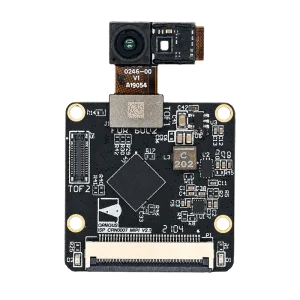

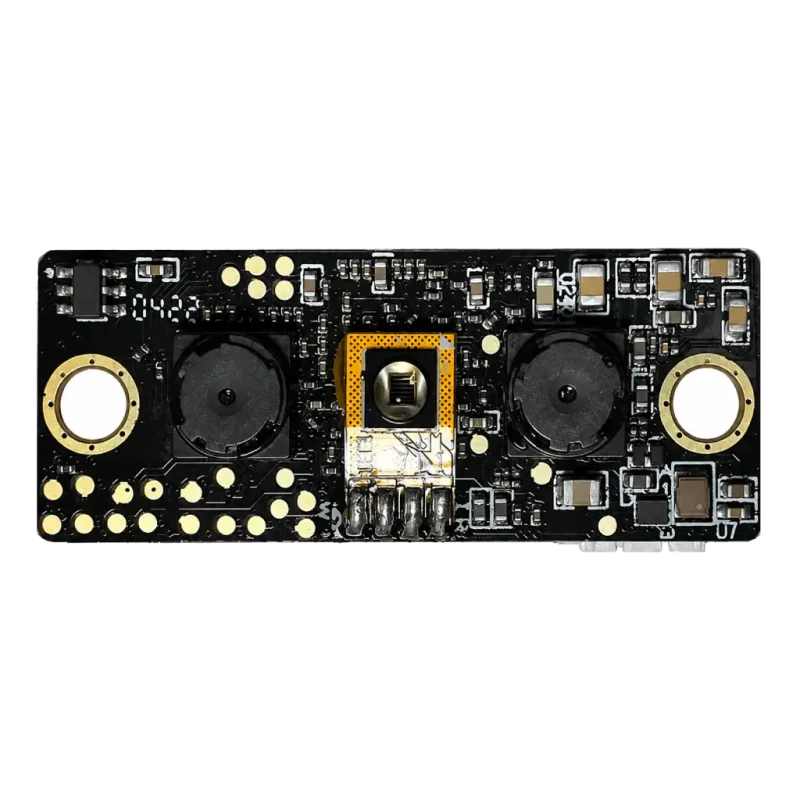
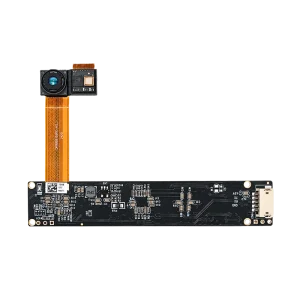
DM-SV001F1 Binocular 3D Face Recognition Module for Smart Locks
DM-SV001F1 brings binocular 3D face recognition and onboard processing to smart locks and embedded access-control terminals. A dual-core RISC-V processor and NPU handle image processing, liveness checks and face comparison, while UART connects the module's recognition and user-management workflow to the host controller. Recognition distance is 0.4-1.0 m, with a cold-start recognition time of 0.3 s.
Key Highlights
- Bring face recognition into a lock or terminal through an onboard binocular sensing and processing architecture.
- Run liveness checks and face comparison on the module, with results available to the host through UART.
- Manage face enrollment, user groups and database deletion through the serial-control workflow.
- Plan the user interaction around a 0.4-1.0 m recognition distance and a 0.3 s cold-start recognition time.
Overview
DM-SV001F1 combines binocular image capture with a dual-core RISC-V processor, an NPU, 64 MB DDR3L memory and 16 MB SPI NOR flash. Image preprocessing and binocular geometric analysis feed the module’s liveness and face-comparison workflow.
The host uses UART for recognition commands and user management. Enrollment, group indexing, permission tiering, batch deletion and database clearing support the terminal’s user-management design. The host application uses the module’s results alongside its own access rules and device controls.
- Cold-Start Recognition
- 0.3 s
- Recognition Distance
- 0.4-1.0 m
- Processor
- Dual-core RISC-V + NPU
- Host Interface
- UART
Applications
Smart locks and entry panels
Use face recognition as an input to a lock or entry-panel controller. Plan camera placement around the user’s approach direction and the 0.4-1.0 m recognition region. Our smart-lock wake-up guide explains how proximity wake-up and recognition fit into separate stages of the host workflow.
Access-control and attendance terminals
Connect the module to a terminal that manages users, entry decisions or attendance events. The UART enrollment and group-management functions let the host coordinate recognition with the site’s user records and control logic.
Lockers and self-service equipment
Add face-comparison results to equipment that needs a user-recognition step, such as smart lockers or membership terminals. Choose the enrollment, deletion and host event flow around the equipment’s operating process.
Technical specifications
| Parameter | Specification |
|---|---|
| Recognition architecture | Binocular 3D face recognition with onboard processing |
| CPU | Dual-core RISC-V processor |
| NPU | Embedded neural processing unit |
| RAM | 64 MB DDR3L |
| Flash | 16 MB SPI NOR |
| Image sensor specification | 1/6-inch CMOS; 640 × 480 (VGA); MIPI interface |
| Host communication | UART |
| Input voltage | 4-9 V |
| Supply requirement | At least 500 mA current capability |
| Recognition distance | 0.4-1.0 m |
| Cold-start recognition time | 0.3 s |
| Horizontal / vertical field of view | 54° horizontal × 68° vertical |
| User-management functions | Enrollment, group indexing, permission tiering, batch deletion, database clearing |
Host and installation planning
Recognition and user management
Use the host controller to initiate the selected UART workflow and act on its results. Plan enrollment, recognition, group assignment and removal around the terminal’s user lifecycle. We can help match the communication and command sequence to the controller design.
Power and camera placement
Provide a 4-9 V supply with at least 500 mA capability. Position the module around the recognition distance, the user’s face position and the field of view. Include the installed window and lighting in the capture setup.
Define the recognition task
Liveness checks and identity comparison serve different parts of a face-recognition workflow. The face-system integration guide explains how sensing, liveness processing and the host’s access decision connect in a finished system.
FAQs
What processing does DM-SV001F1 perform on the module?
It combines image preprocessing, binocular geometric analysis, liveness checks and face comparison using its dual-core RISC-V processor and NPU. The host connects through UART for the recognition and user-management workflow.
What does the 0.3 s time specification cover?
The specification is 0.3 s for cold-start face recognition. Use that recognition-stage figure when planning it within the terminal’s wider wake-up, host-decision and actuator sequence.
How can the host manage enrolled users?
The UART workflow includes face enrollment, group indexing, permission tiering, batch deletion and database clearing. Match those functions to the host’s user records and application rules.
What supply and user position should I plan around?
Provide 4-9 V with at least 500 mA supply capability. The recognition distance is 0.4-1.0 m, with a 54° horizontal × 68° vertical field of view for placement planning.
Discuss your face-recognition terminal
Share the host controller, user position, enrollment workflow and access-control task. We can help plan the DM-SV001F1 module connection and evaluation setup for your lock or terminal.
Need help integrating DM-SV001F1?
Get expert guidance from our sensing engineers on product selection, evaluation samples, system integration, and technical requirements for your application.
You May Also Like
DMAS2M001
DMOM2508CL
DM5005A