
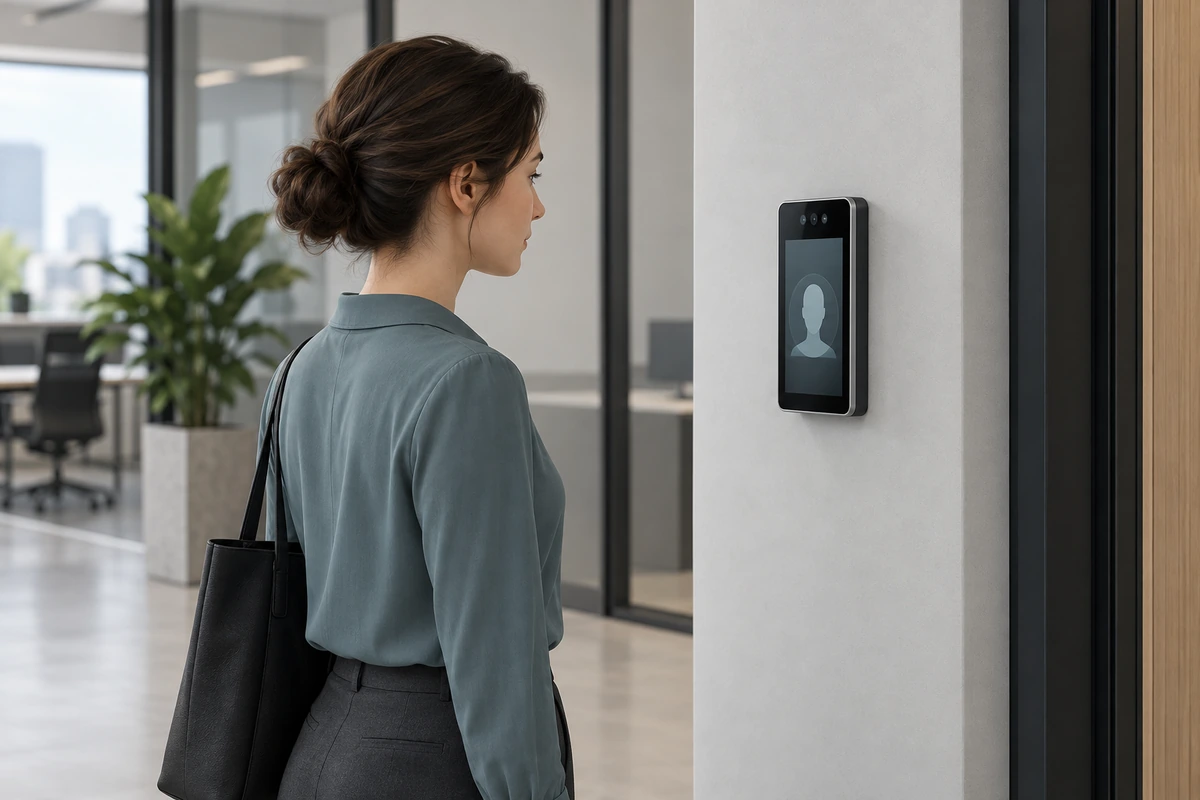
ToF depth gives a face-recognition system geometric observations of a visible face. Application software uses the selected depth, IR or RGB inputs to assess sample quality, extract features and make an authentication decision. Match the camera to that pipeline's working distance, sampling and timing requirements.
Define face geometry, identity and liveness tasks
Face geometry describes the observed surface or estimated pose. Identity verification compares a captured sample with an enrolled identity under an agreed decision rule. Presentation-attack detection evaluates evidence relevant to specified attacks. Each needs its own output and test criteria.
Presence detection can wake a capture system without performing any identity comparison. A face-position estimate can guide a user toward the capture region without authorizing access. Define those intermediate states so the host acts on the appropriate result.
Choose RGB, IR and depth inputs
RGB contributes visible appearance, IR imagery contributes infrared appearance where available, and depth supplies geometry. Select the inputs required by the chosen algorithm and verify that the camera configuration supplies them. An IR image and a metric depth image have different meanings even when they come from the same device.
Passive stereo relies on correspondence between views; active stereo adds projected texture; structured light uses a projected pattern; ToF derives range from optical travel-time-related measurements. Compare the complete configurations on face coverage, ambient light, glasses, motion and host processing. Their labels alone do not establish authentication quality.
Calculate face coverage at capture distance
For a front-facing pinhole approximation, horizontal coverage is W = 2d tan(FOV_h/2). Estimated samples across a feature of width w are N = n_h × w/W, using horizontal image samples n_h. Include distortion, pose and invalid regions when evaluating the actual face.
For illustration, a 0.16 m wide face at 0.7 m with a 64° horizontal field of view spans about 117 samples in a 640-sample depth image. This is a sampling estimate, not a minimum resolution requirement or a recognition result. Evaluate the algorithm with the intended users and capture poses.
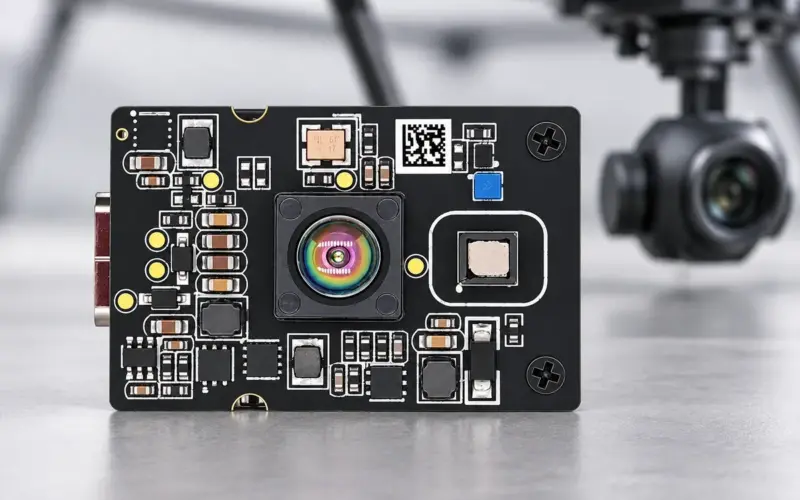
DM-RGBD5003A provides 640 × 480 depth with RGB-depth registration and a 64° × 51° depth field of view. DMOM2508CL provides 320 × 240 MIPI depth over 0.2–2 m. DM5005A supplies 320 × 240 USB depth, with range dependent on the selected 850 nm or 940 nm option. Match the output and sampling to the host algorithm.
Align frames and calibration
Record the depth units, intrinsics, RGB/IR-to-depth relationship and timestamp convention. Check the alignment on the face region at near and far capture positions. RGB-depth spatial registration and simultaneous capture are separate requirements when the subject moves.
Retain quality and invalid-data indicators through preprocessing. Test how filters affect edges, glasses and facial detail, and ensure enrollment and verification use compatible calibration and processing settings. Camera accuracy stated for a small central region should not be expanded into a whole-face measurement guarantee.
Evaluate pose, lighting and presentation attacks
Build a matrix of user heights, capture distances, head poses, motion, low light, backlight and relevant coverings. Measure usable-sample rate, acquisition delay, false matches and false rejections for the exact decision threshold and evaluation set. Report results by important scenario as well as in aggregate.
Presentation-attack evaluation should include relevant printed photos, replayed video and masks according to the product's threat model. Depth can provide evidence of scene geometry, while attack detection depends on the implemented algorithm and complete input chain. Keep attack results separate from ordinary recognition errors.
Connect capture results to host authentication
The host manages enrollment, protected templates, feature comparison, thresholds and the authorization state. It also decides how to retry an unusable capture, handle stale results and use another authorized access method. Record sensor, firmware, calibration and algorithm versions with test results.
For a lock project, see approach sensing and wake-up integration. Send us the capture envelope, required streams and host platform to select a camera route for face-system evaluation.
Discuss your evaluation with DOMI.
FAQs
Does facial depth identify a person directly?
It supplies geometric input. The authentication software manages sample quality, features, enrolled templates and the decision rule for the intended system.
How much resolution is needed on a face?
Calculate samples over the actual face at the planned distance and pose, then evaluate the chosen algorithm. There is no single resolution value established by the ToF label alone.
What should a face-system attack test report?
Report the attack types, samples, hardware, software, thresholds and observed outcomes. Separate presentation attacks from normal-user false matches, false rejections and capture failures.
How is face capture connected to a smart lock?
An approach result can wake the capture subsystem. The host then acquires a usable sample, performs the selected authentication checks and applies the lock's authorization policy.