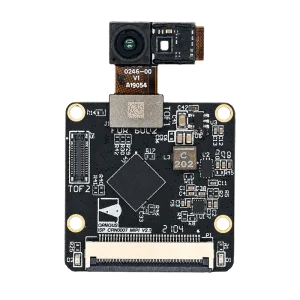

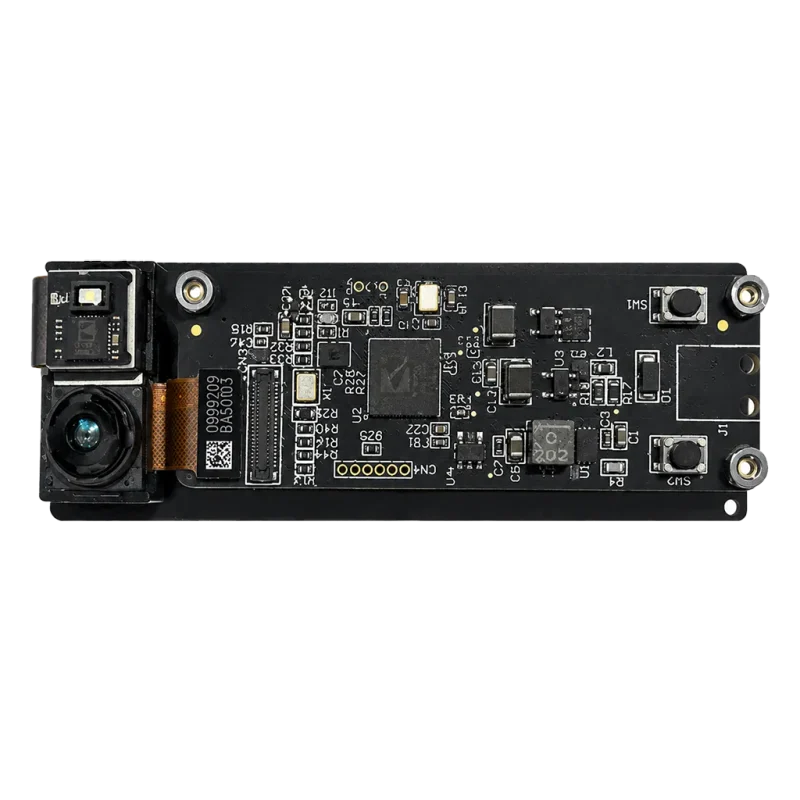
DMOM3006A Real-Time ToF Image Signal Processor (ISP)
DMOM3006A brings phase-to-depth processing and correction functions into your ToF imaging pipeline. It receives sensor data through MIPI CSI-2 and provides a 36-bit readout comprising 14-bit distance, 12-bit IR, 8-bit ambient and 2-bit flag fields. MIPI CSI-2 and DVP host-output options connect the processed data to the application processor.
Key Highlights
- Move phase-to-depth processing into the imaging pipeline with a dedicated ToF ISP.
- Give host software distance and IR information alongside ambient and flag fields in a 36-bit readout.
- Apply pixel calibration, distance non-linearity correction and temperature compensation within the processing path.
- Choose a MIPI CSI-2 or parallel DVP host route around your embedded processor architecture.
Overview
DMOM3006A sits between a ToF sensor and the host application processor. Its ISP functions include a configurable region of interest, a 3 × 3 spatial filter, pixel calibration, distance non-linearity correction, temperature compensation and field-of-view compensation.
Auto exposure and HDR form part of the sensing engine. Configure these functions together with the sensor timing and acquisition path for the scene your application needs to capture.
- ToF Input
- 2-lane MIPI CSI-2 @ 600 Mbps
- Host Output
- 4-lane MIPI CSI-2 TX @ 3.2 Gbps / DVP
- Readout Data
- 14-bit Distance + 12-bit IR + 8-bit Ambient + 2-bit Flag
- ISP Processing
- ROI, 3×3 Spatial Filter, Calibration, HDR & Auto Exposure
Applications
Embedded robot perception
Supply distance and IR data to host software for scene and object analysis. The ISP handles phase-to-depth and correction functions before the host applies its perception and control logic.
Face-capture pipelines
Use the distance and IR fields as inputs to host-side face capture and analysis. The face-system integration guide explains the roles of image capture, liveness processing and authentication in the complete application.
Object measurement and spatial sensing
Provide processed ToF measurements to reconstruction, object-measurement or region-sensing software. ROI and spatial filtering support acquisition planning around the relevant image region. Our volume-measurement guide connects sensing geometry and calibration to measurement tasks.
Technical specifications
| Parameter | Specification |
|---|---|
| ToF sensor input | MIPI CSI-2 receiver; two lanes; up to 600 Mbps |
| MIPI host output | MIPI CSI-2 TX; four lanes; up to 3.2 Gbps |
| Parallel host output | DVP; 8-bit or 12-bit interface with synchronization signal |
| Readout width | 36 bits |
| Readout fields | 14-bit distance, 12-bit IR, 8-bit ambient, 2-bit flag |
| Region selection | Region of interest (ROI) |
| Spatial processing | 3 × 3 spatial filter |
| Calibration and correction | Pixel calibration, distance non-linearity correction, temperature compensation, FOV compensation |
| Sensing engine | Auto exposure; HDR |
Sensor and host integration
Define the capture path
Choose the sensor, input timing and data format together with the ISP configuration. Then select the host’s MIPI CSI-2 or DVP receiver and driver around the required output. The ToF module selection guide compares sensing heads, processed modules and camera routes.
Plan calibration around the assembled camera
Use the final illumination, lens, cover window and mounting arrangement when planning calibration. Pixel, distance and field-of-view corrections belong to the complete optical and processing configuration. The depth-camera calibration guide explains how reference captures support this work.
USB evaluation route
A USB evaluation connection uses additional conversion hardware. DMOM5630A is the companion-board route for discussing USB 2.0 evaluation with DMOM3006A. We can help match the sensor, ISP, conversion board and host software as one configuration.
FAQs
What information does the 36-bit readout contain?
The readout combines 14-bit distance, 12-bit IR, 8-bit ambient and 2-bit flag fields. The field widths describe the data representation supplied to the host.
Which interfaces connect the sensor and host?
The sensor path uses two-lane MIPI CSI-2 receiver input at up to 600 Mbps. Host output uses four-lane MIPI CSI-2 TX at up to 3.2 Gbps or an 8-bit/12-bit DVP interface with a synchronization signal.
What correction and sensing functions are available?
DMOM3006A provides ROI, a 3 × 3 spatial filter, pixel calibration, distance non-linearity correction, temperature compensation and FOV compensation. The sensing engine includes auto exposure and HDR.
How can I plan USB evaluation?
Plan the USB route with additional conversion hardware, including the DMOM5630A companion-board configuration. Include the selected ToF sensor, required output and host software in the evaluation setup.
Discuss your ToF processing pipeline
Tell us the sensor model, phase-data format, required output and host processor. We can help plan the DMOM3006A input, processing and host connection around your camera design.
Need help integrating DMOM3006A?
Get expert guidance from our sensing engineers on product selection, evaluation samples, system integration, and technical requirements for your application.
You May Also Like
DMAS2M001
DMOM2508CL
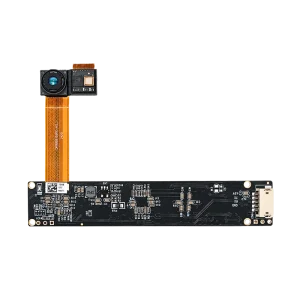
DM5005A