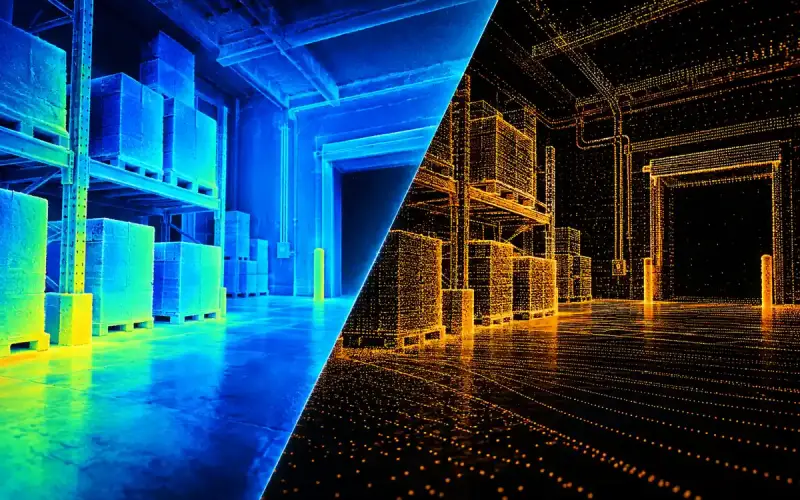

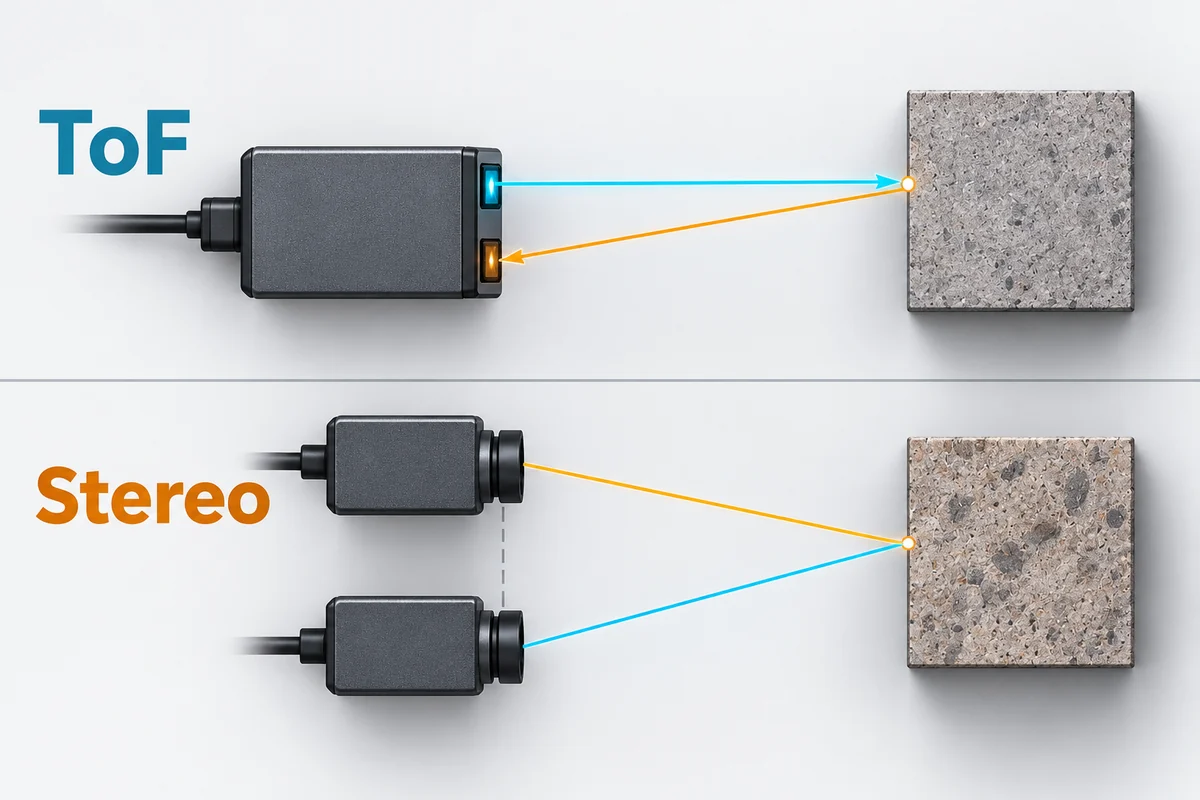
ToF and stereo cameras both provide depth information, using different measurements. A ToF camera estimates the travel delay of emitted light. Stereo vision calculates geometry from corresponding features viewed by two cameras. The useful choice depends on the scene, working distance, available space and processing requirements.
For an engineering comparison, define the same target, field of view, light conditions and motion for both candidates. Compare complete camera systems and their output quality in that setup.
Understand passive and active stereo
Passive stereo uses features already visible in the scene. It needs enough image information for the matching process to relate the two views. Uniform surfaces, repeated patterns and occlusions can make that task harder.
Active stereo adds projected texture to help create correspondences. The cameras still obtain depth through their geometric relationship. The added illumination changes the operating conditions, so a statement about passive stereo's light requirements should not automatically be applied to every active stereo product.
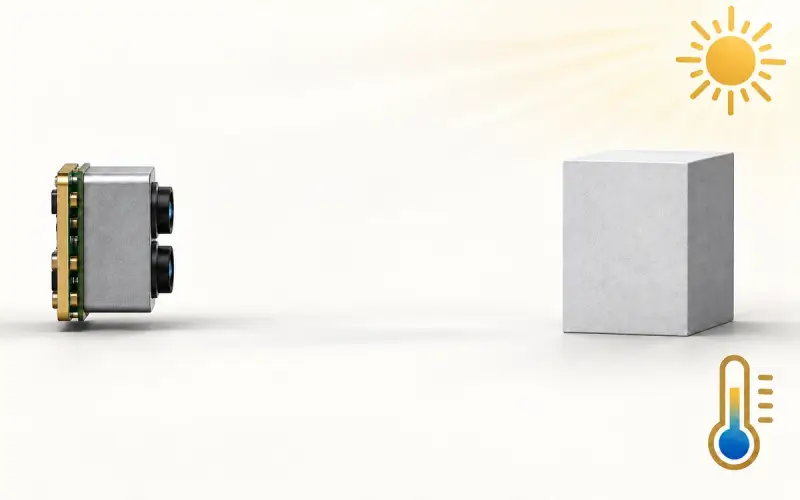
ToF uses active illumination and estimates its return delay across the measurement area. Its useful depth depends on the returned signal, optics, ambient light, sampling and processing. Texture is a different issue from target reflectivity: a visually plain surface can still return useful illumination, while a dark or reflective material may need closer evaluation.
Compare the scene conditions
| Selection condition | What to examine in a ToF system | What to examine in a stereo system |
|---|---|---|
| Uniform or low-texture surfaces | Return strength, missing depth and edge behavior | Availability of image correspondences and any projected texture |
| Bright ambient light | Filtering, usable return and the specified light conditions | Image exposure and, for active stereo, the useful projected pattern |
| Dark visible-light environment | Active illumination and target return within the operating range | Passive image signal or active illumination available to the system |
| Moving targets | Integration, sampling sequence and depth artifacts | Exposure, shutter behavior, synchronization and matching performance |
| Small or thin objects | Spatial sampling and mixed pixels at boundaries | Visibility in both views and correspondence quality |
| Reflective or transparent surfaces | Multipath, saturation or missing returns | Image reflections, ambiguity and missing correspondences |
This comparison identifies evaluation questions. It does not assign a universal winner to either technology. Record both depth error and the part of the target for which useful data is available.
Working distance, coverage and installation
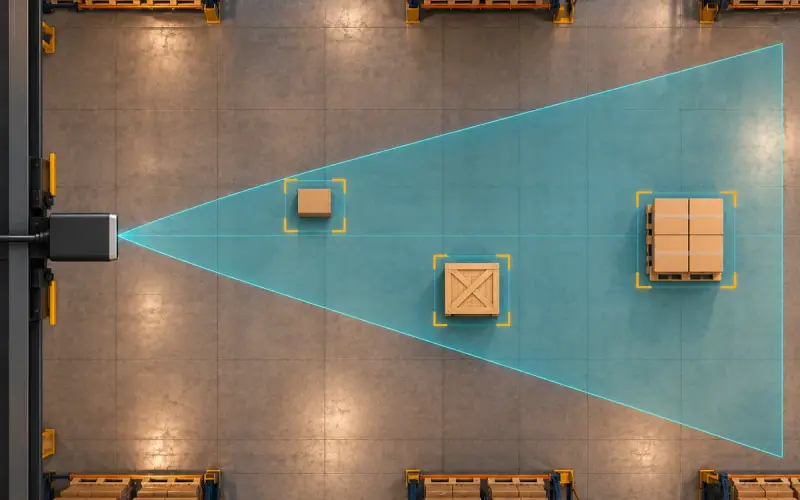
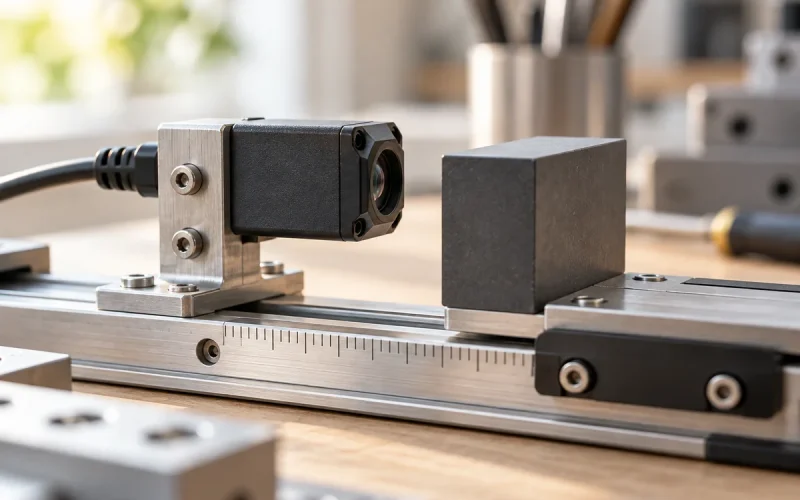
A stereo design's baseline, camera calibration and matching process affect its depth behavior at different distances. A ToF design's illumination, receiver and measurement mode also shape its useful working region. Compare the products across the distances your application uses.
Include the near limit and the smallest relevant target at the far limit. A wide field of view can cover more space while spreading image samples over a larger scene. Mounting space and the visibility of an object in both stereo views can also affect the choice.
Use the ToF camera selection guide for the relationship between coverage, resolution and host integration. For a broader view of measurement routes, read depth camera types.
Compare a shared target region before comparing depth error
For a ToF vs stereo accuracy trial, define a physical target region visible from both candidate installations. Use a separate target mask and retain each camera’s invalid samples, instead of averaging only whichever points the device happened to return. Compare distance error on valid points and coverage of the required region together.
Include a target interior, a depth edge and a narrow or partly hidden feature as separate cases. For stereo, the required surface needs usable correspondence in both views; for ToF, test the return and mixed-edge behavior in the same scene. Record passive or active stereo explicitly, including whether its projector is enabled. This makes a depth camera comparison reproducible without treating either technology’s name as an accuracy rating.
Compare processing and software integration
Identify where depth is calculated and which data reaches the host. A stereo product may include its own processing, while another system expects host resources for image matching. ToF products also differ between raw samples and calculated depth output.
Compare the actual software interface, calibration data, timestamps, supported streams and coordinate conventions. If you are replacing a camera, allow for changes to the driver and application processing even when the connector looks familiar.
For a USB ToF RGB-D evaluation, DM-RGBD5002A and DM-RGBD5003A provide DOMI starting points. Match their model-specific specifications to the same task used for the stereo candidate.
Build a comparison that answers the application question
Use representative materials, edges and occlusions. Evaluate static scenes first, then repeat at the intended target or camera motion. Record the acquisition settings and software version so that a configuration change can be distinguished from a hardware difference.
The result should explain whether each candidate supplies the geometry your application needs, with enough usable data and suitable timing. Share that task and its constraints through our contact page for help evaluating the DOMI side of the comparison.
FAQs
What is the main difference between ToF and stereo cameras?
ToF estimates the travel delay of active illumination. Stereo estimates geometry from corresponding image features in two calibrated views. Active stereo can add projected texture while retaining the stereo measurement method.
Which technology works better outdoors?
Compare specific products under the expected sunlight, target and working distances. Outdoor behavior depends on exposure, illumination, filtering and processing, as well as the measurement method. Use the outdoor ToF guide to plan the ToF evaluation.
Is a ToF camera always faster or smaller than a stereo camera?
Those are product-level comparisons. Measure the complete system's size, acquisition timing and host processing delay. Different camera designs place their processing in different locations and offer different operating modes.