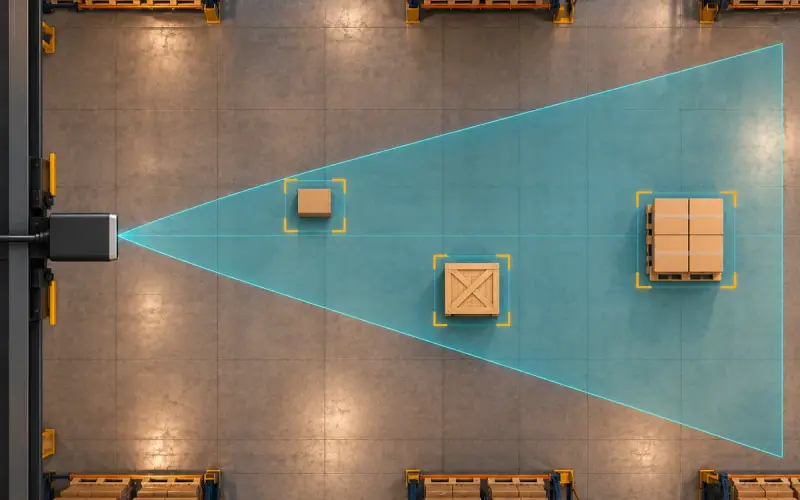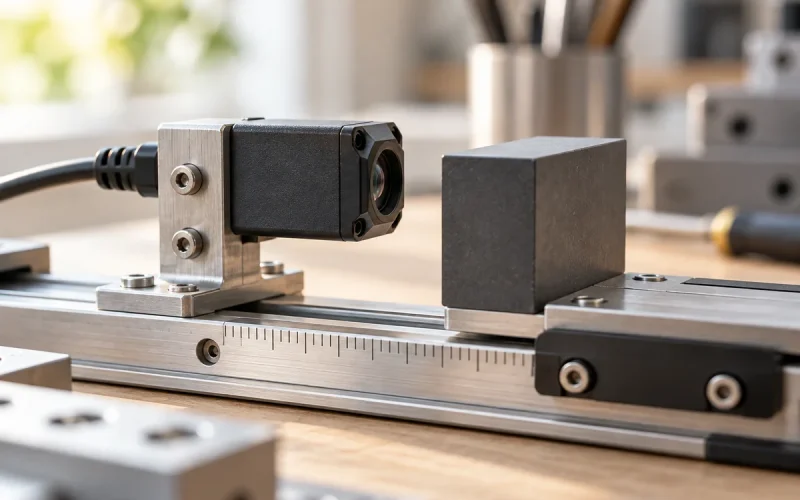

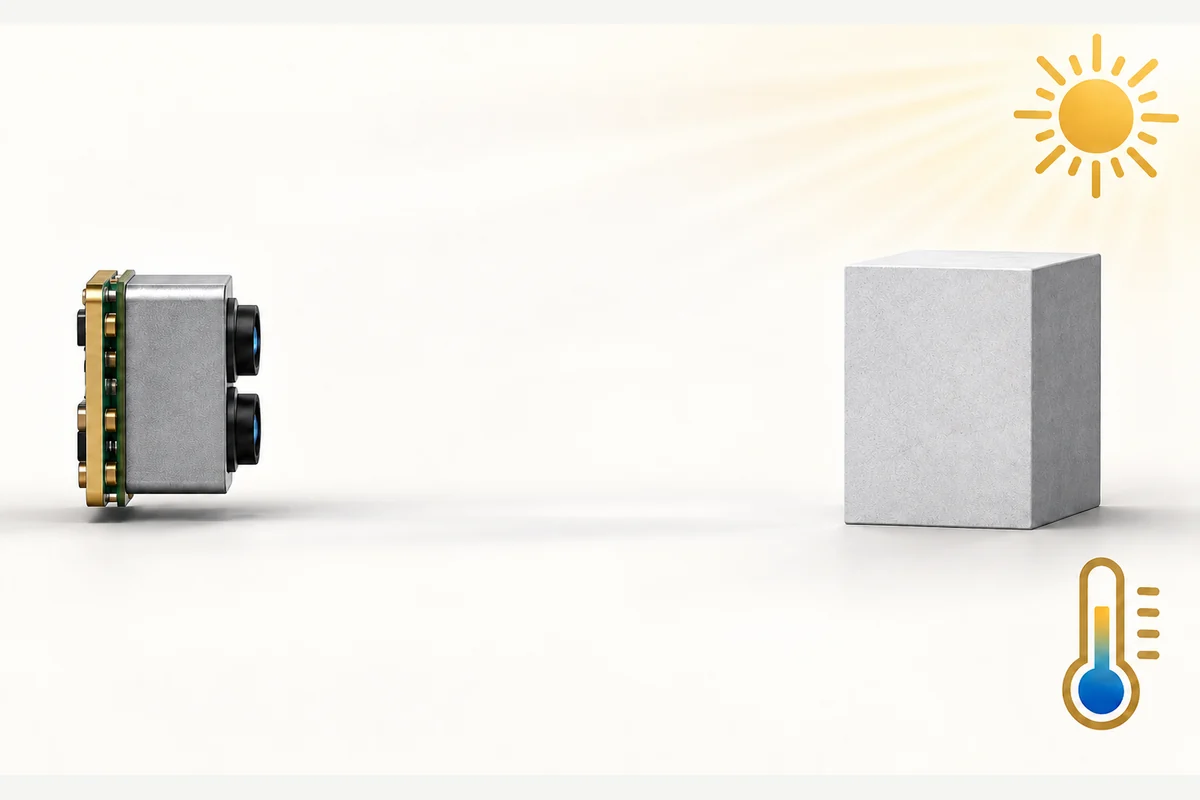
Choosing a ToF camera for outdoor use starts with the scene: the distance to your target, the sunlight it receives, the surfaces you need to measure and the way the camera will be installed. These details help turn a broad camera specification into a useful shortlist for your project.
A suitable ToF camera can provide depth data outdoors when its optical performance and environmental design match the application. Evaluate the intended camera configuration under representative lighting, temperature and installation conditions, including the final protective window or enclosure.
What makes a ToF camera suitable for outdoor use?
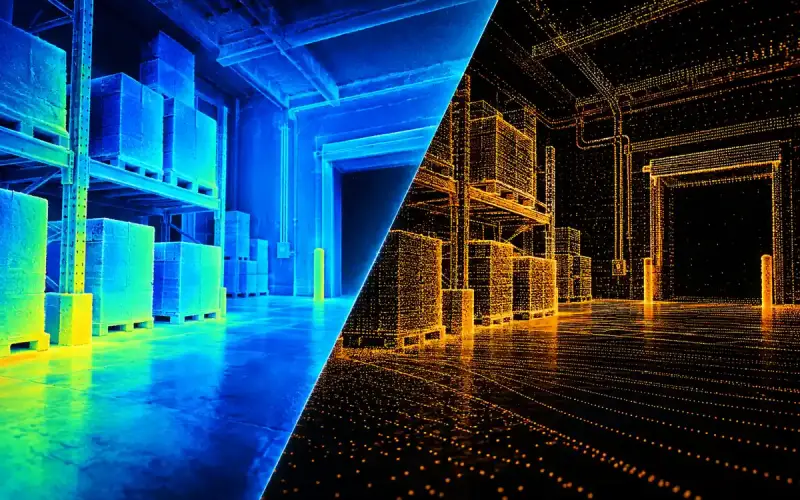
Time-of-flight sensing measures distance using emitted light and its return from a scene. A depth camera applies this principle across an image to describe the positions and shapes of objects. Because the camera supplies its own illumination, it can capture depth without relying solely on visible scene lighting. Ambient light still matters: light reaching the receiver in its sensitive wavelength band can affect the measurement.
For outdoor selection, assess two aspects together:
- Depth performance: useful measurement range, target coverage, repeatability and the proportion of usable depth readings in your scene.
- Installation suitability: operating temperature, heat dissipation, protection from water and dust, and the optical path through the finished housing.
A sheltered entrance, a sunlit loading area and an exposed installation present different requirements. Describe the actual location before comparing cameras.
How does sunlight affect a ToF camera?
Sunlight adds background light at the receiver. A strong background can make it harder to distinguish the camera's reflected signal, reducing the quality or availability of depth readings. Optical filtering helps control the received spectrum, while the camera's sensing architecture and settings also influence its response.
During evaluation, include sunlit and shaded targets, the camera's expected viewing directions and transitions between lighting conditions. Keep the target distance and surface consistent when comparing results. If a sunshade or a different mounting angle is part of the design, include it in the test configuration.
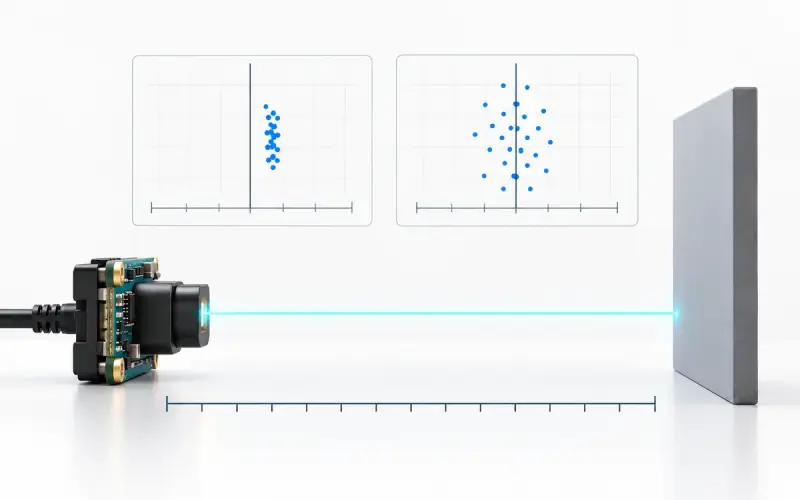
Record both measurement error and usable readings. A result based only on the frames that returned a distance can hide gaps that matter to the application.
When comparing ambient-light specifications, retain the stated light source, target, distance and measurement settings. A lux figure describes visible illuminance; it does not by itself describe the infrared background received by a ToF camera.
Separate sunlight on the target from sunlight at the receiver
Keep the camera and target fixed while varying their exposure to sunlight. A shaded camera looking at a sunlit target is a different optical condition from sunlight entering the receiver while the target remains shaded. Testing only one of these arrangements can leave an important part of the installation unexamined.
| Test arrangement | What to keep with the result |
|---|---|
| Camera shaded; target shaded | Baseline target, distance, settings and usable depth region |
| Camera shaded; target sunlit | Target illumination and the returned measurement quality |
| Light reaching the receiver; target shaded | Sun direction relative to the lens and any hood or enclosure |
| Camera and target exposed; transition into shade | Depth availability and recovery through the transition |
These are proposed test cases, not outdoor performance ratings. Keep the same required image region in every run and retain failed frames in the coverage calculation. Record the test time and geometry so that a result from a sunlit loading bay can be compared with a later repeat, rather than represented only by one ambient-lux number.
Why target surface and distance belong in the same test
The return signal depends on the target and the geometry of the scene. Surface reflectivity, reflections from nearby objects and the angle of the target can influence depth measurements.
Build the evaluation around the objects your system will encounter. For a loading-area application, for example, a practical test plan could include cardboard packaging, dark containers and reflective wrapping at near, middle and far working positions.
Use the same objects when moving between indoor, shaded and sunlit tests. This makes the comparison more useful than testing different scenes in each location.
How should temperature be included in outdoor selection?
Temperature can affect distance measurement, including during camera warm-up. Heat dissipation and mounting contribute to the camera's operating temperature.
Plan checks from startup through normal operation and across the temperatures expected at the installation. Record ambient temperature and, where available, camera or housing temperature alongside the depth results. Use the operating limits and startup guidance for the selected model rather than applying one warm-up duration to every ToF camera.
Repeat the evaluation with the intended mounting and enclosure. This provides a useful basis for comparing bench results with the assembled system.
What changes when adding a protective window?
A cover window becomes part of the optical design. Its transmission at the sensor's operating wavelength and reflections between the emitter, window and receiver can affect sensing. Window geometry and optical separation therefore deserve attention during integration.
Evaluate the final window material, spacing and mounting arrangement. If calibration is required for that configuration, follow the selected device's procedure and keep the configuration with the results.
Humidity also belongs in the installation review. Condensation can form on optics when conditions cross the dew point; moisture ingress is a separate enclosure concern. Include realistic transitions, such as moving equipment between an air-conditioned room and a warm, humid outdoor area, in the environmental test plan when they apply to your project.
Indoor, sheltered and exposed installations: what to compare
Use this table to prepare a project evaluation. It is a planning checklist, not a set of performance ratings.
| Installation | Conditions to record | Evaluation focus |
|---|---|---|
| Indoor space near windows | Time of day, sun patches, target surfaces and distance | Compare the same targets before and during direct illumination |
| Sheltered entrance or loading bay | Shade-to-sun transitions, camera direction and target movement | Check usable depth coverage as targets move through the working area |
| Exposed outdoor installation | Lighting directions, temperature range, window and enclosure arrangement | Evaluate the assembled unit across representative operating conditions |
| Mobile equipment moving indoors and outdoors | Route, lighting transitions, startup state and motion | Record performance through transitions as well as at fixed test positions |
For each test, keep the camera configuration, reference distance, target, region of interest and lighting conditions with the results. Compare distance error, variation across repeated readings and usable depth coverage against the needs of your application.
Choose a DOMI sensing route for your project
Start with our ToF camera modules when you are selecting a depth-sensing component for an embedded design. Compare the available interfaces, field of view and working ranges against your host and installation requirements.
Explore our RGB-D cameras when your application uses both color images and depth information. Include the lighting requirements of the color image in the evaluation as well as those of the depth measurement.
For checks after adding the camera to your assembly, see our RGB-D calibration guide.
Discuss your application with DOMI. Share the target objects, working distance, coverage area, sunlight exposure, temperature range and host interface. We can help you compare sensing options and organize the next evaluation step.
FAQs
Can a ToF camera work in direct sunlight?
A suitable camera can provide depth data in sunlit conditions. Selection depends on the specific camera, target, distance and lighting geometry. Compare results from your intended installation, including the proportion of usable depth readings, to choose an appropriate configuration.
What should I specify when choosing an outdoor ToF camera?
Describe the target materials and sizes, nearest and farthest working distances, required coverage, target movement, sunlight exposure and temperature range. Add the enclosure or cover-window arrangement, host interface and the measurement criteria your application needs to meet.
Does a protective enclosure establish outdoor depth performance?
Enclosure protection and depth performance address different requirements. Evaluate both the housing's suitability for the location and the camera's measurements through the final optical window under representative conditions.