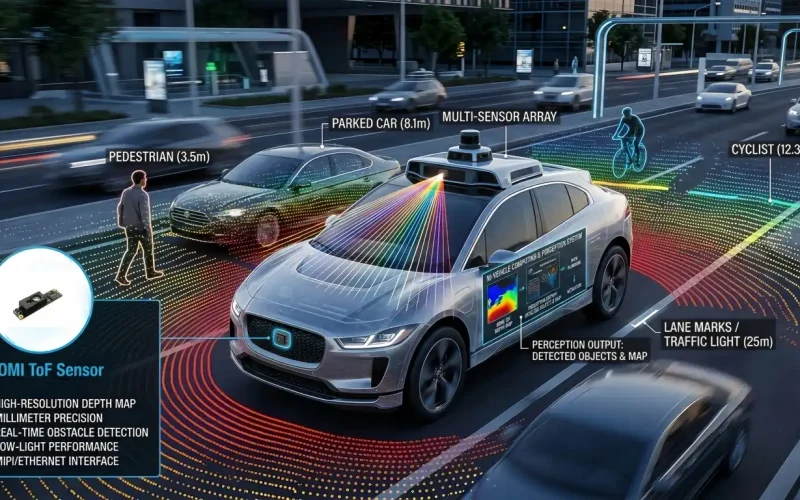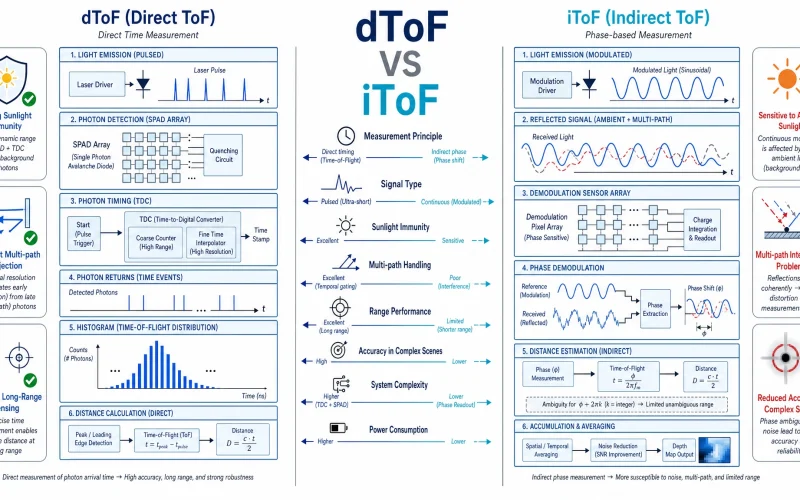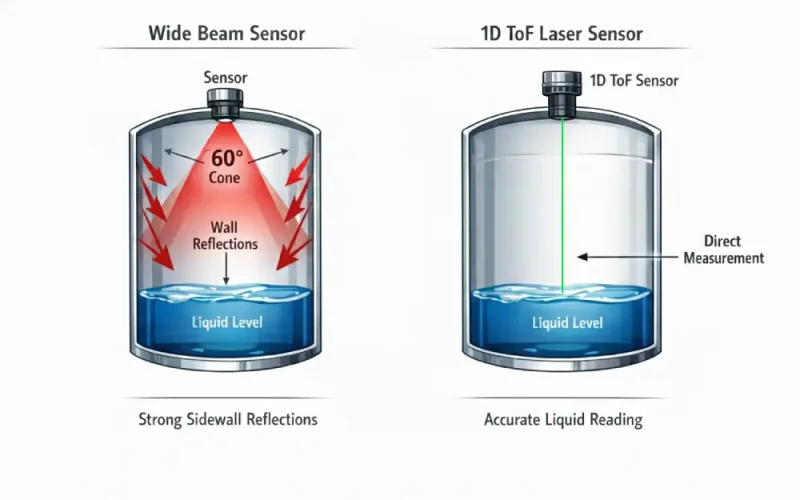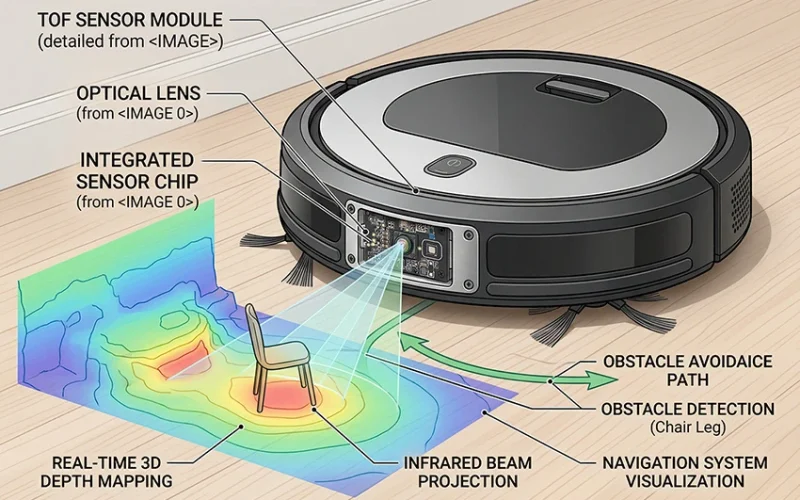

Integrating a ToF camera into an IoT product starts with the task, not the sensor label. A smart-home device may need only presence or short-range distance, while a people-counting or robot application may need a depth image. Choose the least detailed output that supports the function and test it in the final enclosure.
Define the sensing task
For a touchless interface, specify the activation distance, false-trigger rate, response time, and conditions such as steam or a wet cover. For an autonomous device, specify the obstacle sizes, floor and wall materials, and control-loop timing. For a smart-home occupancy feature, define when a person enters or leaves the zone and how the system handles pets and stationary occupants.
Hardware and software integration
- Confirm supply, interface, sampling rate, power states, and host processing from the exact module documentation.
- Set emitter and receiver placement, field of view, and optical cover before testing. The cover can create crosstalk or attenuate the return.
- Use confidence or validity indicators when available; handle missing and out-of-range samples explicitly.
- Test crosstalk from nearby active sensors and lighting in the intended environment.
Privacy and lifecycle
Depth-only data can avoid collecting RGB images, but privacy still depends on what is stored, combined, and shared. Document retention and access controls for the complete product. If a legacy article names a specific module for a smart-home scenario, verify its current availability and datasheet before making a model-level recommendation.