
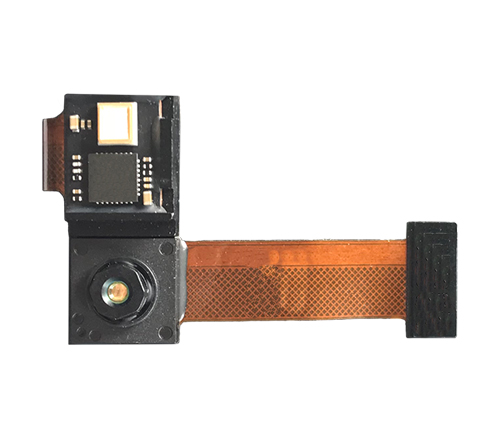
A ToF camera can supply facial depth to a face-recognition system. Depth may help distinguish some flat images from three-dimensional scenes and can provide geometry when visible-light conditions change. It does not identify a person by itself and does not guarantee resistance to spoofing.
How the system uses depth
The camera measures a depth image; application software detects a face, checks whether the sample is usable, extracts features, compares them with an enrolled template, and makes a decision. Some products combine depth with RGB or infrared imaging. Whether a module supplies those streams must be confirmed from its own specification; ToF alone does not automatically provide color images.
Smart-door-lock integration
For a lock, evaluate the field of view and working distance for users of different heights, the mounting position, low-light and backlight behavior, glasses and coverings, enrollment quality, and response time. Provide another authorized way to enter if sensing or recognition fails. Store biometric templates under a documented access and retention policy.
Security claims need system evidence
Test both false matches and false rejections on the intended population. Presentation-attack testing should include relevant print, screen, mask, and other threat types, with results for the exact hardware and algorithm. A comparison between 2D and 3D sensing cannot establish a universal security advantage without that evidence. Avoid calling a depth camera “payment grade” or “spoof proof” solely because it measures depth.