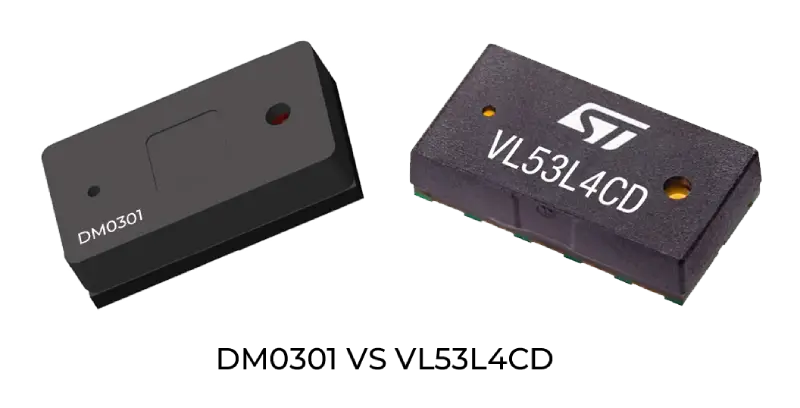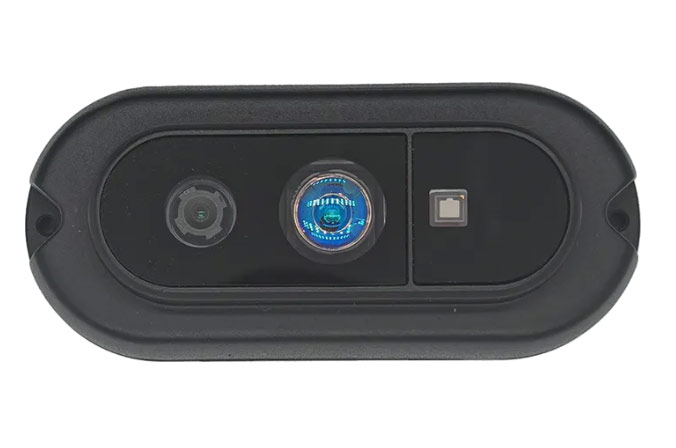

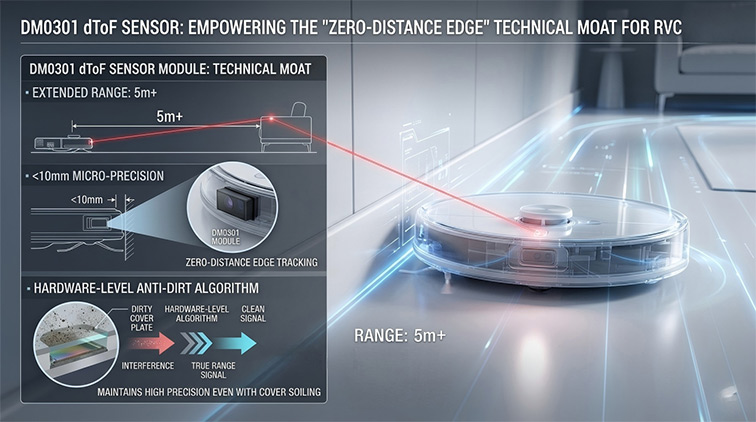
A robotic vacuum can use a direct Time-of-Flight (dToF) ranging sensor such as the DM0301 for local distance measurements. The useful role depends on where the sensor is mounted: front-facing measurements can help detect an approaching obstacle, a side sensor can help maintain wall clearance, and a downward-facing sensor can contribute to edge detection. These are separate integration and validation problems.
Near-field obstacle and wall sensing
Choose a mounting angle and field of view that cover the relevant obstacle height. Set thresholds with margin for robot speed, update latency, braking distance, and measurement uncertainty. A distance sample alone does not classify a cable, fabric, pet waste, or a transparent surface. Test such objects explicitly and combine sensing methods when a missed obstacle matters.
Cliff and edge detection
A downward sensor may see a larger distance where floor support ends, but dark carpets, glossy tiles, steep thresholds, and the sensor’s minimum and maximum valid ranges complicate detection. Keep edge handling independent from the navigation map and validate it as part of the complete robot. A ToF measurement is not a safety certification.
Integration checklist
- Verify the DM0301 datasheet and production firmware for interface, timing, operating range, and ambient-light conditions.
- Measure valid-return rate and distance error on the actual floor and wall materials, including low-reflectance and high-reflectance cases.
- Check optical cover crosstalk, contamination, vibration, and interference from other emitters.
- Test the control response at the robot’s highest relevant approach speed, including sensor faults and missing returns.
Product-specific range or accuracy should always be stated with its target and lighting conditions. A navigation or cleaning benefit is a system result, not a sensor-only specification.