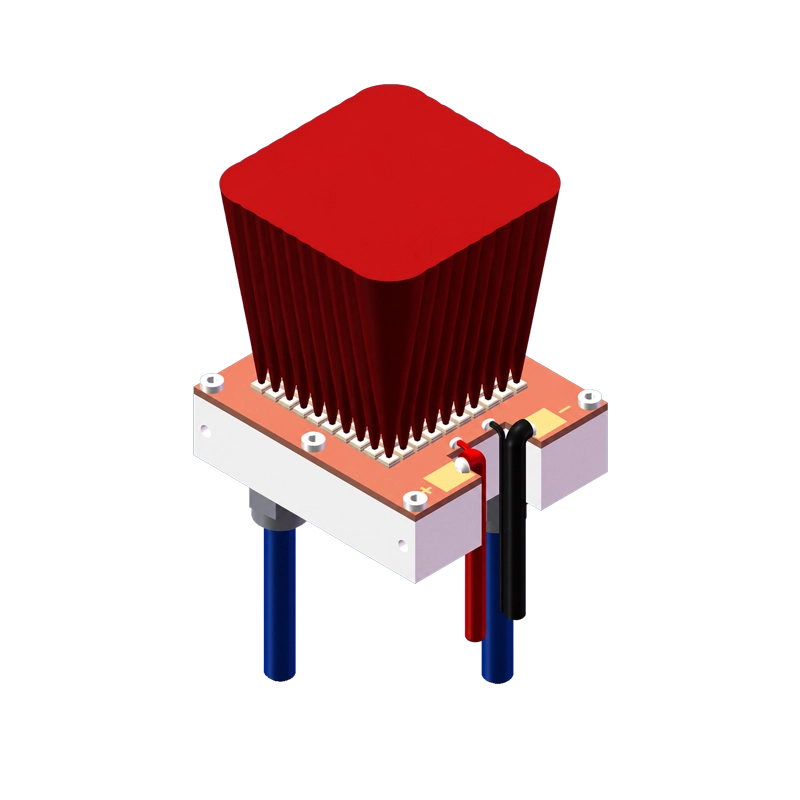
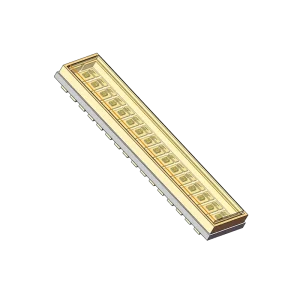
The first item below summarizes the datasheet precautions. The remaining items are engineering review recommendations, not additional guaranteed product specifications.
1. Protect Against ESD, EOS and Surges
The datasheet warns that electrostatic discharge (ESD), electrical overstress (EOS) and electrical surges can damage the laser and degrade performance. Use driver surge protection, proper equipment/personnel grounding and an ESD-controlled handling process, including suitable ionization and antistatic equipment.
2. Review the Driver at the Actual Operating Point
200 W denotes the documented optical-output point, not electrical input power. Review current regulation, voltage headroom, startup/shutdown behavior, transients and cable losses with the intended driver. Do not use the listed 24 A or 50 V maxima as independent safe operating limits, or infer pulse current and duty-cycle ratings from CW data.
3. Verify the Cooling Loop and NTC Readout
Verify that the module cooling path meets 15-25 °C water temperature and ≥10 L/min flow in the installed system. Obtain pressure-drop, coolant-quality and fitting requirements before selecting the pump and plumbing. Request NTC R25, tolerances and calibration information before setting measurement or shutdown thresholds.
4. Qualify Beam Delivery and System Safety
Measure delivered power and beam profile at the intended working distance. Include laser-safety review, enclosure/interlock design and thermal/flow fault handling in the system validation plan. This datasheet does not state a laser safety class, divergence angle, uniformity specification, lifetime, IP rating or product certification.