Resolution 40 × 30 at 10 fps
Range 0.2-8 m @ 30 klux
Field of View 60° H × 45° V

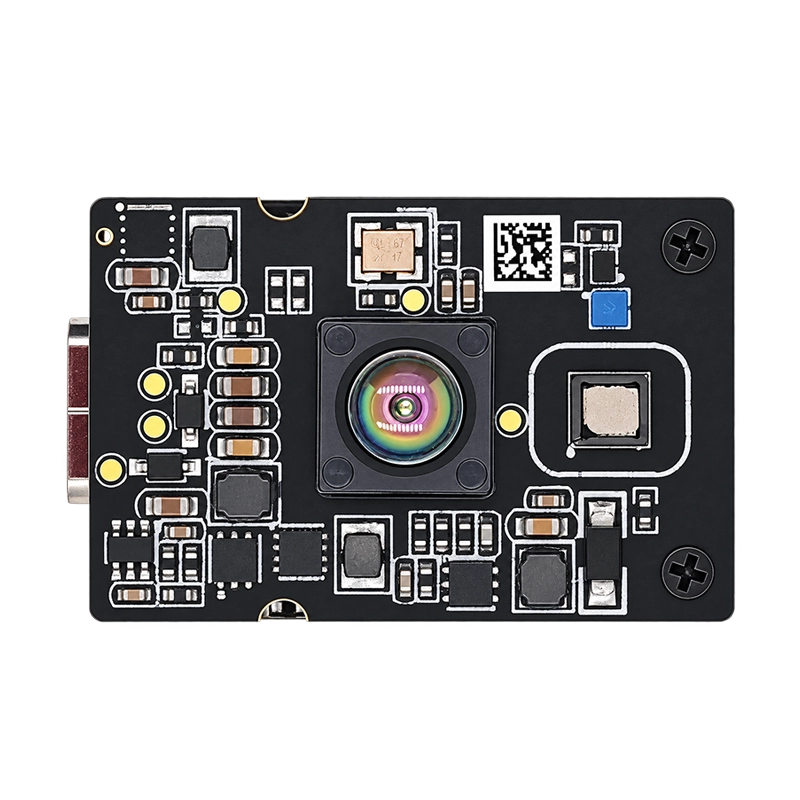
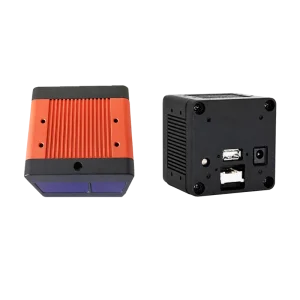
DMAS2M001 Compact 8 m SPAD dToF Array Module

40 × 30 3D depth module combining a hybrid-stacked SPAD array and 940 nm VCSEL for 0.2-8 m ranging at 30 klux, with USB-C/FPC interfaces and point-cloud, depth and confidence outputs.

Key Highlights

  • 0.2-8 m @ 10%-90% reflectivity and 30 klux
  • Segmented accuracy: ≤ ±2 cm, ≤ ±3 cm, and ≤ 1%
  • 60° × 45° FoV at 10 fps with 940 nm VCSEL
  • Class 1, 7 g, and approximately 1 W power consumption
Engineering support

Overview

The DOMI DMAS2M001 is a compact dToF array module that combines a hybrid-stacked Single-Photon Avalanche Diode (SPAD) sensor with a 940 nm VCSEL illuminator. It delivers 40 × 30 depth data at 10 fps across a 60° horizontal × 45° vertical field of view.

The published ranging specification is 0.2-8 m for targets from 10% to 90% reflectivity at 30 klux. Accuracy is specified by distance band: ±2 cm or better from 0.2-1 m, ±3 cm or better from 1-3 m, and 1% or better from 3-8 m. These conditions make the module a candidate for compact robotic perception, UAV ranging and other embedded 3D sensing designs that must operate beyond controlled indoor lighting.

Core Engineering Features

  • Integrated 3D sensing pipeline: outputs point-cloud, depth and confidence data through UDP or UVC workflows.
  • Environmental compensation: preprocessing includes calibration, peak detection and temperature compensation; post-processing includes scattering correction, temporal filtering, flying-pixel filtering and an anti-sunlight algorithm.
  • Embedded-system interfaces: USB-C and FPC interface options support evaluation and product integration. Confirm the exact connector, pinout and protocol configuration for the selected build.
  • Low SWaP profile: the cased module measures 35.5 × 25 × 16 mm, weighs 7 g and has approximately 1 W power consumption.
  • Development support: the datasheet lists SDK support for Windows, ARM and Linux platforms.

Selection note: the published range and accuracy values are module-level specifications under stated conditions. Final performance depends on the target, optical window, contamination, motion, ambient light, temperature, host configuration and mechanical integration.


Resolution
40 × 30 at 10 fps
Range
0.2-8 m @ 30 klux
Field of View
60° H × 45° V
Interface
USB-C / FPC

Applications

DMAS2M001 is designed for compact equipment that needs spatial depth rather than a single distance value. The following applications are based on uses named in the datasheet; system performance must be validated in the intended scene.

UAV altitude hold and leveling

  • Target subsystem: downward-looking drone altimeters, terrain-following sensors and landing-assistance modules.
  • Why it fits: 7 g mass, 0.2-8 m published range and 30 klux test condition support evaluation in weight-sensitive platforms and changing outdoor illumination.

Robot navigation and obstacle avoidance

  • Target subsystem: service robots, AMRs, AGVs and autonomous equipment requiring a compact depth input.
  • Why it fits: the 60° × 45° depth field, confidence output and flying-pixel filtering can support obstacle-zone perception and navigation-assistance pipelines.

Autofocus assistance

  • Target subsystem: smart cameras, inspection cameras and imaging systems that need scene-distance input.
  • Why it fits: direct depth and confidence data provide a geometric cue that can be fused with the camera control pipeline, including in low-texture scenes.

Security and presence monitoring

  • Target subsystem: protected-zone monitors, people-presence sensors and depth-aware security equipment.
  • Why it fits: point-cloud, depth and confidence outputs allow spatial rules to be developed without relying on visible-light texture alone.

Technical Specifications

3D depth and optical performance

ParameterDatasheet specification
Ranging principleDirect Time-of-Flight (dToF), hybrid-stacked SPAD array
Distance range0.2-8 m @ 10%-90% target reflectivity, 30 klux
Accuracy, 0.2-1 m≤ ±2 cm
Accuracy, 1-3 m≤ ±3 cm
Accuracy, 3-8 m≤ 1%
Depth resolution40 × 30
Frame rate10 fps
Field of view60° horizontal × 45° vertical
Illumination940 nm VCSEL
Eye safetyClass 1 (module datasheet classification)

Processing, interface and output

ParameterDatasheet specification
Pre-processingCalibration, peak detection, temperature compensation
Post-processingScattering correction, temporal filtering, flying-pixel filtering, anti-sunlight algorithm
Physical interfaceUSB-C / FPC
ProtocolUDP / UVC
Output dataPoint cloud, depth and confidence data
SDK platformsWindows / ARM / Linux

Electrical, mechanical and environmental

ParameterDatasheet specification
Power supply5 V / 1 A
Power consumptionApproximately 1 W
Size with casing35.5 × 25 × 16 mm
Weight7 g
ColorBlack
Operating temperature-20 to 60 °C
Storage temperature-30 to 70 °C

FAE accuracy note: the datasheet presents range and accuracy values but does not provide a complete test procedure, confidence threshold, frame-averaging setting, target geometry, motion condition or temperature point. Confirm the current acceptance test and firmware configuration before design freeze.

Integration Guidance

Optical and mechanical integration

  • Keep the receive aperture and VCSEL emission path free of enclosure vignetting.
  • Validate any cover window for 940 nm transmission, reflections, crosstalk and contamination sensitivity.
  • Reserve clearance for the 35.5 × 25 × 16 mm cased envelope, cable routing and mounting tolerances.

Host and data pipeline

  • Select USB-C or FPC only after confirming the exact electrical interface, connector definition and available protocol mode.
  • Budget host bandwidth and compute for the required point-cloud, depth and confidence streams at 10 fps.
  • Confirm SDK version, API, driver, example code and target OS or ARM platform before software architecture freeze.

Production validation checklist

  • Recheck range, accuracy, flying pixels and confidence across the actual target reflectivity, distance and ambient-light envelope.
  • Validate temperature drift, warm-up behavior, power integrity, peak current and enclosure thermal performance.
  • Evaluate multi-camera or multi-sensor interference if more than one active 940 nm depth system operates in the same scene.
  • Complete end-product laser-safety, EMC, ESD, mechanical and target-market regulatory verification. A module-level Class 1 statement does not by itself certify the finished product.
  • Confirm calibration retention, firmware lifecycle, production test limits, change-notification process and supply status with DOMI.

FAQs

Does DMAS2M001 combine a SPAD array with a 940 nm VCSEL?

Yes. DMAS2M001 uses a hybrid-stacked SPAD receiver and a 940 nm VCSEL light source for direct Time-of-Flight depth sensing.

Can DMAS2M001 measure from 0.2 m to 8 m at 30 klux?

Yes. The datasheet specifies a 0.2-8 m distance range for targets from 10% to 90% reflectivity at 30 klux. Final range must be validated with the actual target, cover window, contamination, motion and temperature conditions.

Does DMAS2M001 provide a segmented depth-accuracy specification?

Yes. The published error limits are ±2 cm or better from 0.2-1 m, ±3 cm or better from 1-3 m, and 1% or better from 3-8 m. Confirm the current production test method before design freeze.

Does DMAS2M001 output point-cloud, depth and confidence data?

Yes. The datasheet lists point-cloud, depth and confidence outputs. It also lists UDP and UVC protocols; confirm which streams and formats are available on the selected interface and firmware.

Does DMAS2M001 support USB-C and FPC interfaces?

Yes. USB-C and FPC are both listed as interface options. Request the current connector drawing, pinout, electrical definition and supported protocol mode for the configuration you intend to purchase.

Is an SDK available for Windows, ARM and Linux?

Yes. The datasheet lists SDK support for Windows, ARM and Linux. Confirm current operating-system versions, toolchain requirements, drivers, APIs and redistribution terms for your project.

Is the DMAS2M001 specified as a Class 1 laser product?

Yes. The module datasheet identifies the eye-safety classification as Class 1. The finished product still requires laser-safety assessment after the module is installed behind the final window, enclosure and control electronics.

Is DMAS2M001 suitable for size- and power-constrained equipment?

Yes. The cased module is specified at 35.5 × 25 × 16 mm, 7 g and approximately 1 W power consumption, with a 5 V / 1 A supply requirement. System designers should still budget for startup, peak current and thermal conditions.

Can DMAS2M001 be evaluated for UAVs, robots, autofocus and security monitoring?

Yes. UAV altitude determination and leveling, navigation obstacle avoidance, autofocus assistance and security monitoring are applications named in the datasheet. Qualification in the intended environment is required before production use.

Need help integrating DMAS2M001?

Get expert guidance from our sensing engineers on product selection, evaluation samples, system integration, and technical requirements for your application.

You May Also Like

DMOM2508CL

View Details

DM5005A

View Details

DMOM2501C

View Details

DM-PS2601-VGA

View Details